









Mad Science Show
- Level: Foundation/Kinder to Year 6
- Duration: 60 minute show
- Numbers: Suitable for up to 240 students
- Price: $995
- State: VIC & NSW
*Travel surcharge also applies based on location.
*Prices exclude GST.
"*" indicates required fields
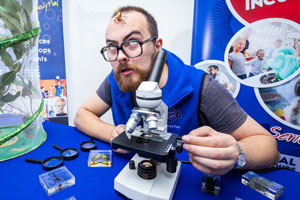
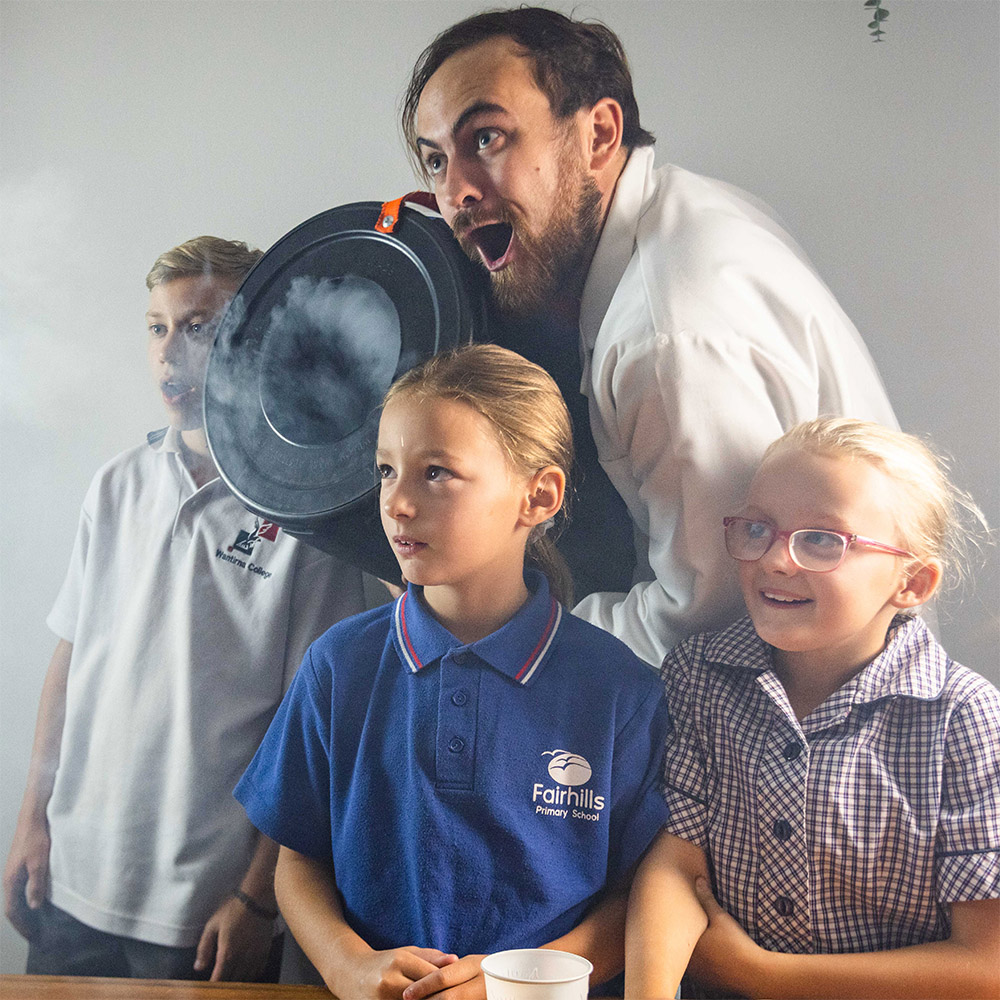
A jam-packed 60-minute show of big WOW science madness! There are giant smoke vortices, levitating beach balls, flying toilet paper, flour fireballs, hair-raising electricity, and lots of learning!
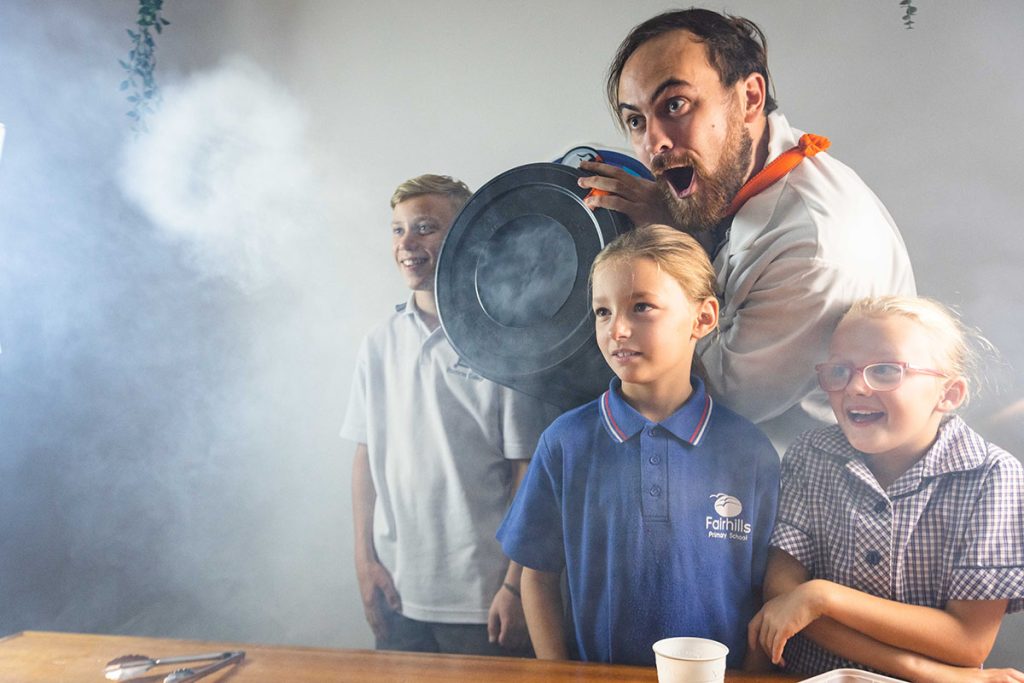
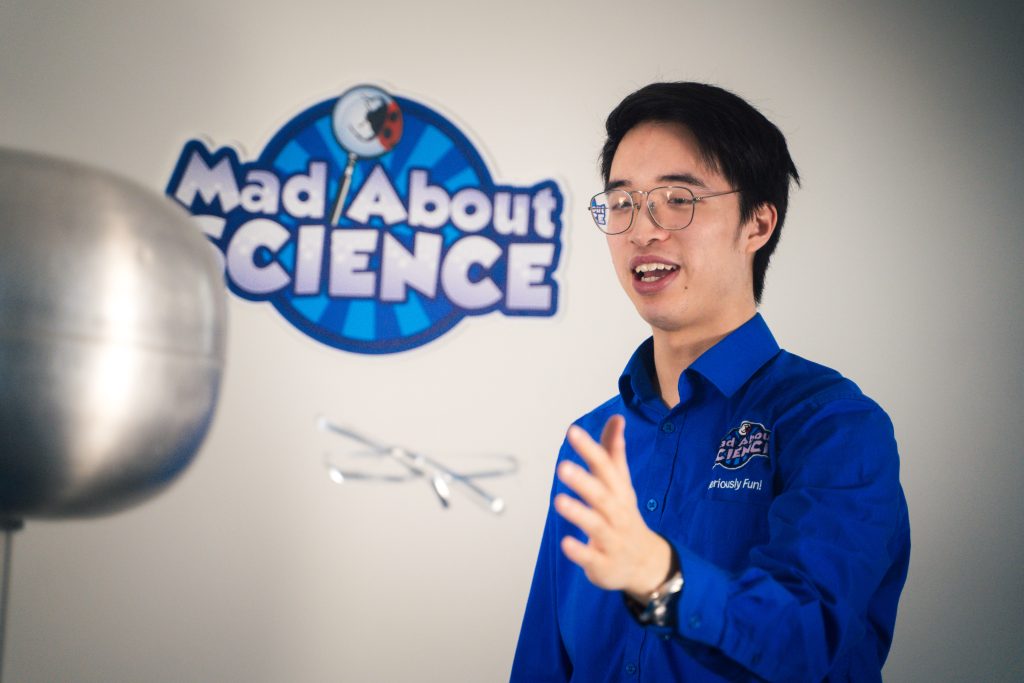
The MAD SCIENCE SHOW is a science sampler to immerse students in science, and whet their appetite. It is full of demonstrations and includes some audience participation. Please see our other workshops if you require more of a hands-on experience for your students.
Air, electricity & fire!
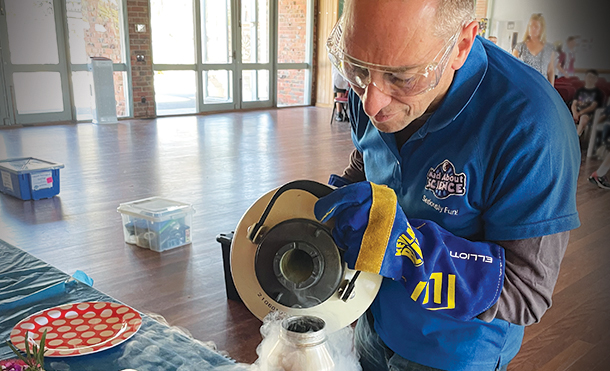
- Air is invisible, odourless, all around, takes up space, and exerts a pressure. It can also be used as a weapon! Look out for an airzooka assault and some giant smoke vortex rings.
- We fly toilet paper using Bernoulli’s principle, and levitate ping pong balls and beach balls. Watch as all these fly before your faces!
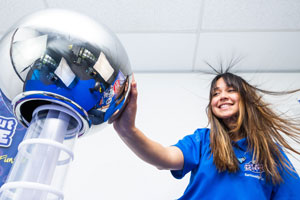
- There are two types of electricity: flowing and static. We make some super static electricity with our Van de Graaff Generator. Watch wool fly, fluttering confetti fireworks, and a hair-raising demonstration.
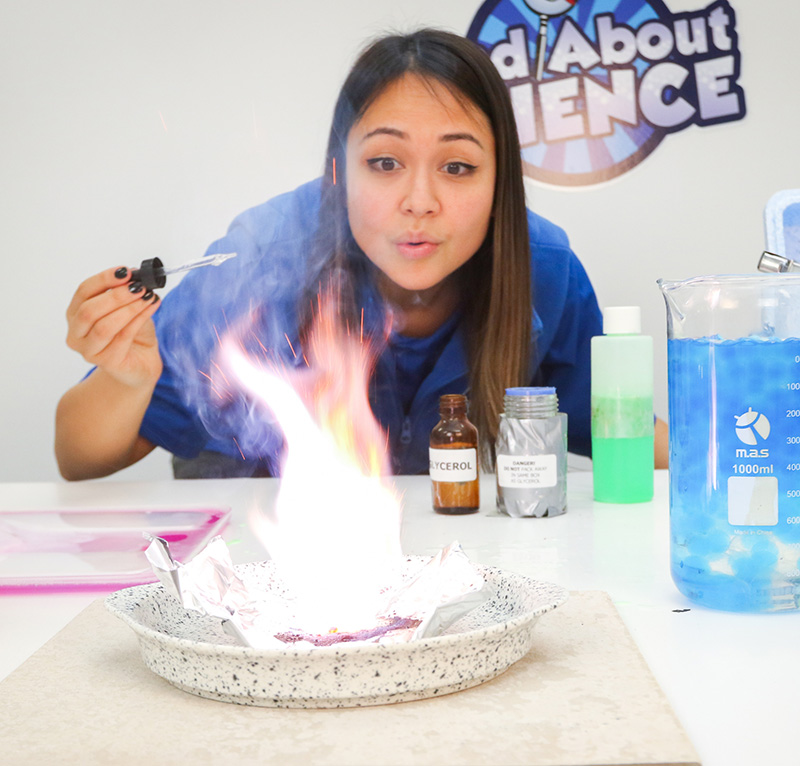
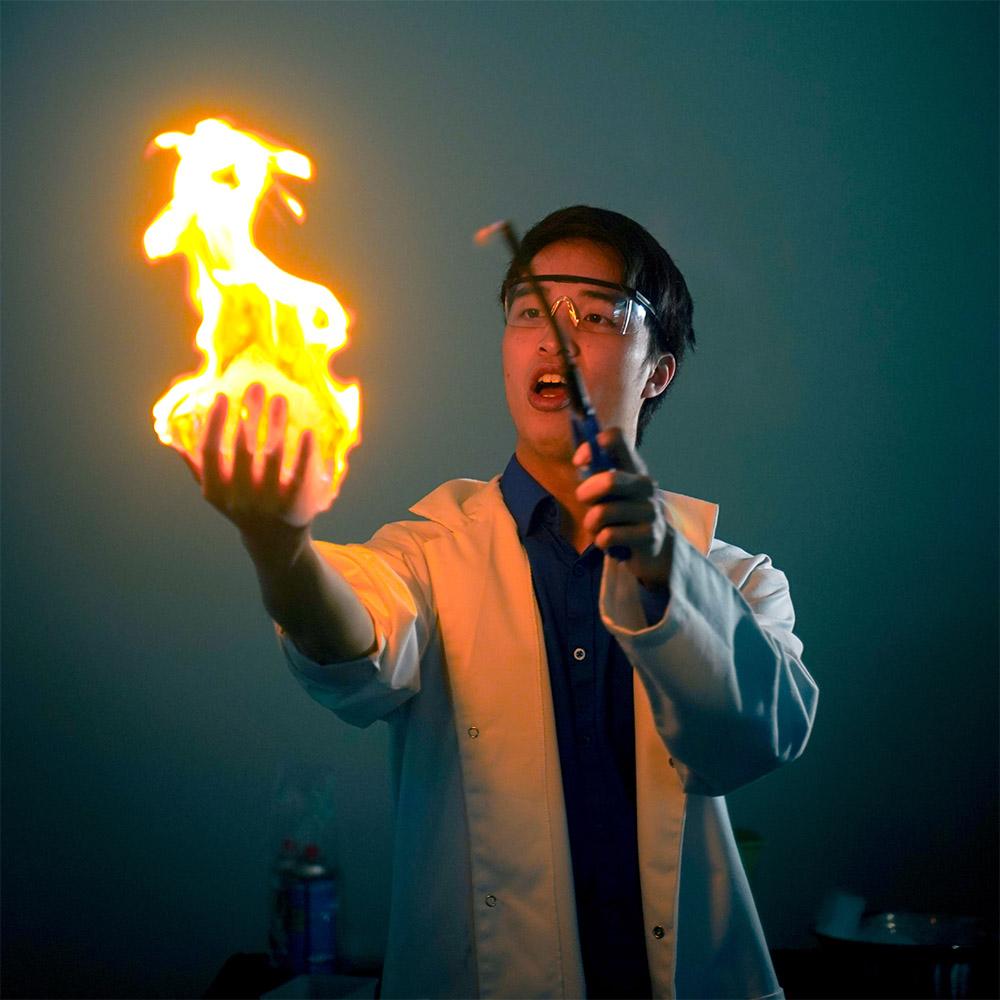
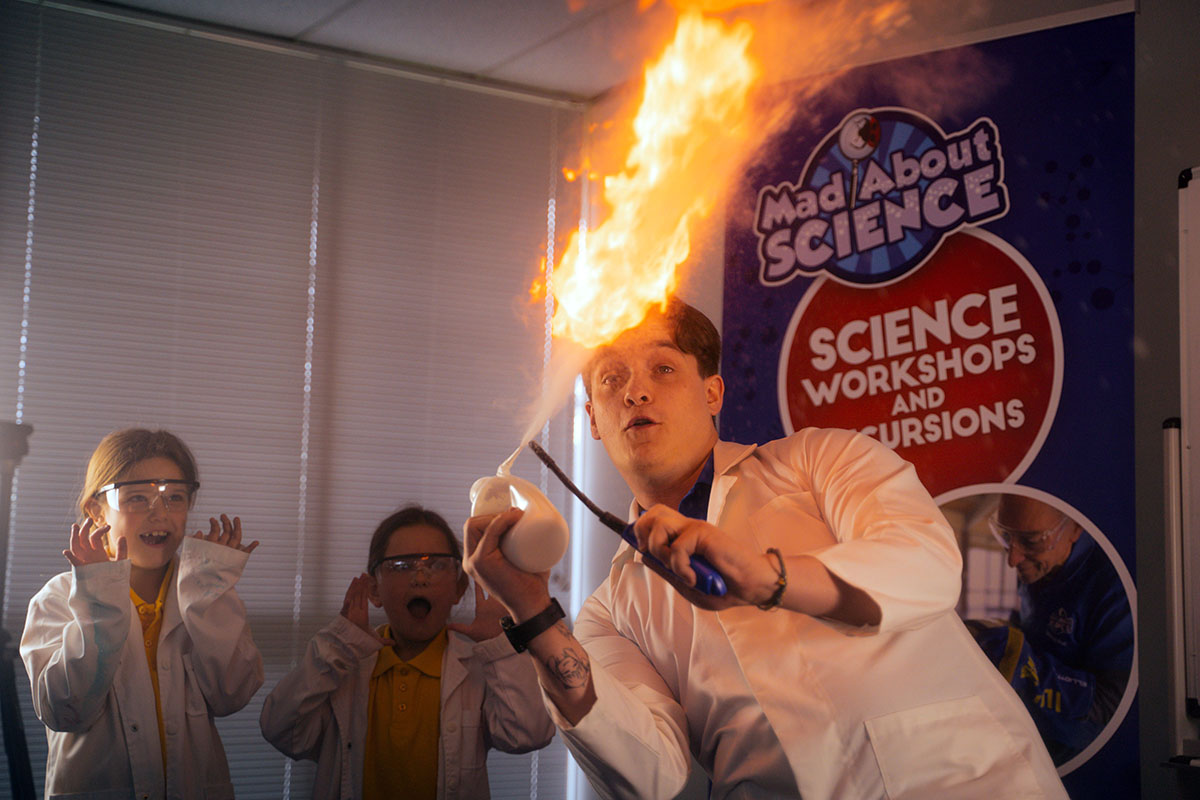
- We end with FIRE! Learn about the fire triangle, and how flour can burn under the right conditions.
- *** The Mad Science Show is also available in a fire/smoke free version upon request ***
Learning Outcomes
- Students will explore Bernoulli’s principle and understand the basics of flight.
- Air travels in vortices when released from an airzooka.
- Static electricity is when electrons build up and stay in one place, like lighting or jumping on a trampoline.
- Current electricity is when electrons flow in a circuit.
- Fire requires three things; oxygen, heat energy, and fuel.
- Some materials such as cornflour have a flammable property.
The fire/smoke free version also includes the following learning outcomes:
- Chemical reactions create new chemicals, such as gas, and are often irreversible.
- Some chemical reactions yield a lot of energy. These are called exothermic reactions.
Victorian Curriculum Links
- Science is used by people in their daily lives, including asking questions and using patterns from observations of the world around them to make scientific predictions (VC2S2H02)
- Scientific knowledge, skills and data can be used by people to explain how they will meet a need or solve a problem (VC2S4H02)
- The way objects move depends on a variety of factors including their size, shape and material (VC2S2U10)
- Pushes and pulls are forces that can change an object’s movement or shape and can be represented in terms of strength and direction (VC2S2U11)
- Forces, including frictional, gravitational, electrostatic and magnetic, can be exerted by one object on another through direct contact or from a distance and affect the motion (speed and direction) of objects (VC2S4U10)
- Materials may be electrical insulators or conductors; energy can be transferred and transformed in electrical circuits where the components of a circuit play particular roles in the function of the circuit (VC2S6U09)
NSW Curriculum Links
- Working scientifically. Observing. Uses senses and scientific tools to make observations (SCLS-WS-01)
- Working scientifically. Questioning and predicting. Develops questions and hypotheses for scientific investigation (SC5-WS-02)
- Describes the effects of forces in everyday contexts (SC4-FOR-01)
- Describes a range of reaction types (SC5-RXN-01)
Australian Curriculum Links
- A push or a pull affects how an object moves or changes shape (ACSSU033)
- Forces can be exerted by one object on another through direct contact or from a distance (ACSSU076)
- Heat can be produced in many ways and can move from one object to another (ACSSU049)
- Changes to materials can be reversible or irreversible (ACSSU095)
- Electrical energy can be transferred and transformed in electrical circuits and can be generated from a range of sources (ACSSU097)
- Science involves observing, asking questions about, and describing changes in, objects and events (ACSHE034)
- Pose and respond to questions, and make predictions about familiar objects and events (ACSIS037)
- Compare observations with those of others (ACSIS041)