










Wicked Weather
- Level: Foundation/Kinder to Year 2
- Duration: 60 or 90 minutes (90 minutes recommended)
- Numbers: Maximum of 30 students per workshop
- State: VIC & NSW
- Price
60 min: $450 per workshop
90 min: $560 per workshop
*Travel surcharge also applies based on location.
*Prices exclude GST.
*There is a minimum booking of 3 x 60 minute workshops or 2 x 90 minute workshops on the same day – or their cost equivalent.
"*" indicates required fields
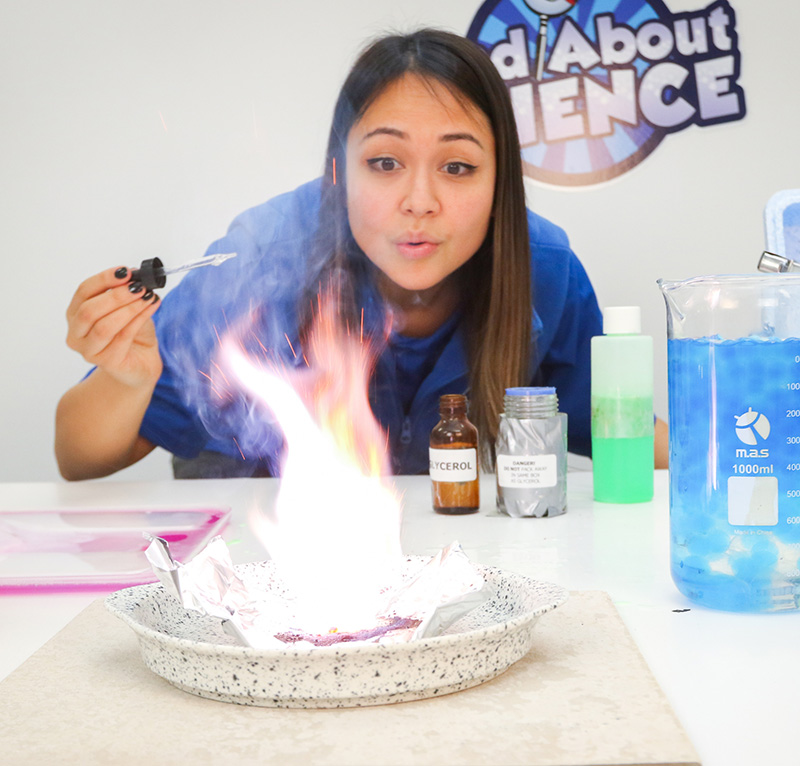
Air in our atmosphere is always on the move, shaping weather around the globe. In this dynamic, hands-on workshop, students model swirling air and water currents, uncover how clouds, rain, and snow form, and erupt their own flurry of snow!

Activities
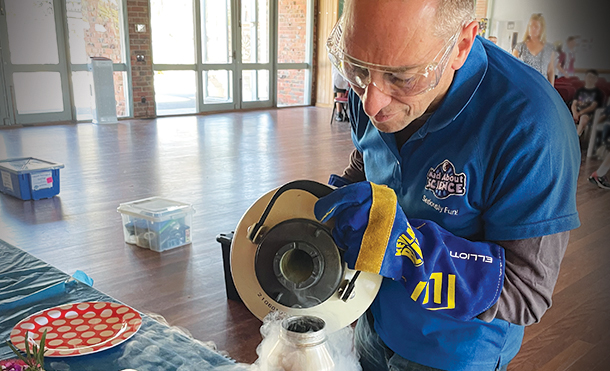
- Compare the steam produced by boiling water to the formation of a cloud. Observe a simulation of rain forming and falling.
- Use basic laboratory equipment to make a simple model of the water cycle.
- Each student erupts snow polymer, and explores its texture and properties.
- Students conduct some simple tests to determine whether the material used in T-shirts and sunglasses blocks UV radiation.
- Each student makes a simple UV detector to keep.
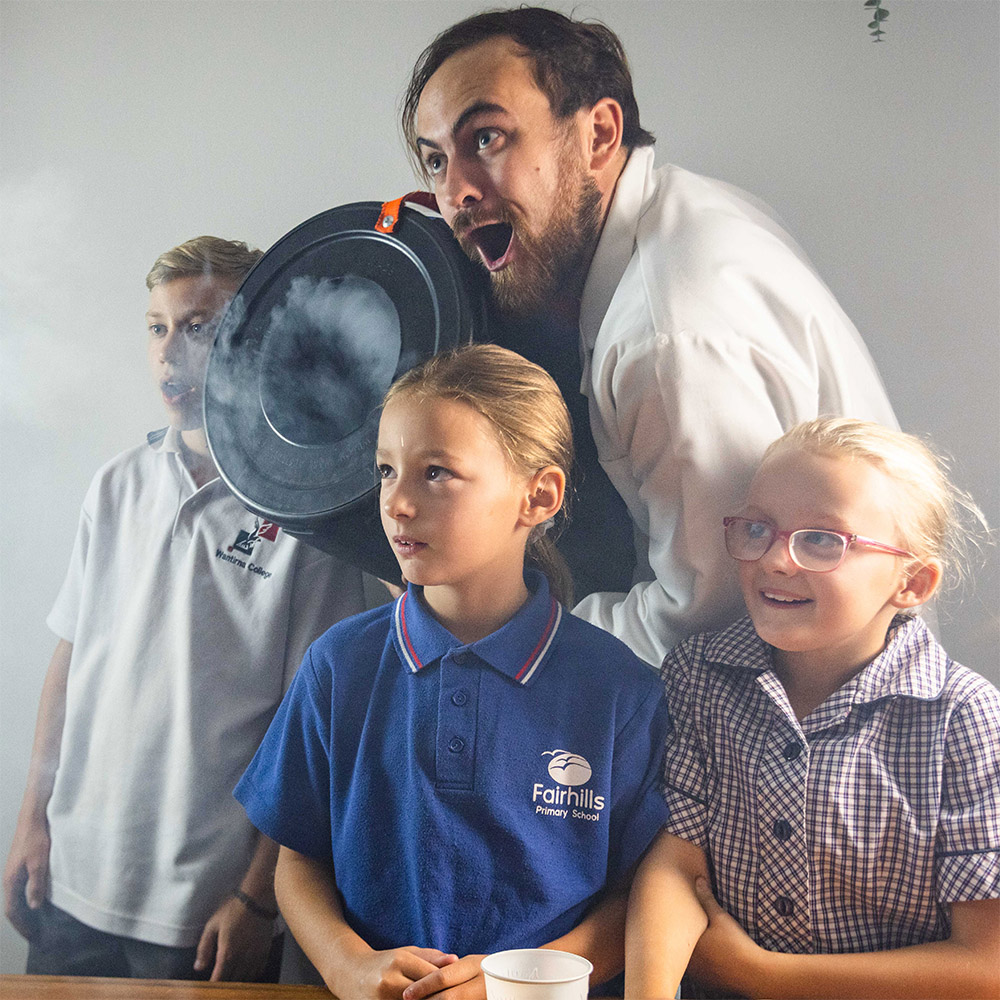
- Observe a simulation of a tornado.
90 minute workshops also include these activities:
- Exciting demonstration of an instant cloud in a bottle.
- Demonstration of a cloud in a bottle with ethanol under pressure.
- Model how the rotation of the Earth affects the way air moves around the world.
Learning Outcomes
- Our weather changes because the air in the Earth’s atmosphere is always moving and changing.
- Weather impacts many aspects of our lives such as what we wear, what we eat, where we holiday, where we live, and what sort of houses we live in.
- Clouds are made of condensed water vapour. When water vapour in clouds cools and condenses, rain drops form.
- The Earth rotates and revolves on a tilted axis. This gives us the seasons.
- Rainwater is fresh water, even if it originally came from the ocean. This is important as plants need fresh water to grow.
- Snow is made up of tiny, frozen water crystals.
- UV radiation from the Sun can be damaging to our skin and eyes.
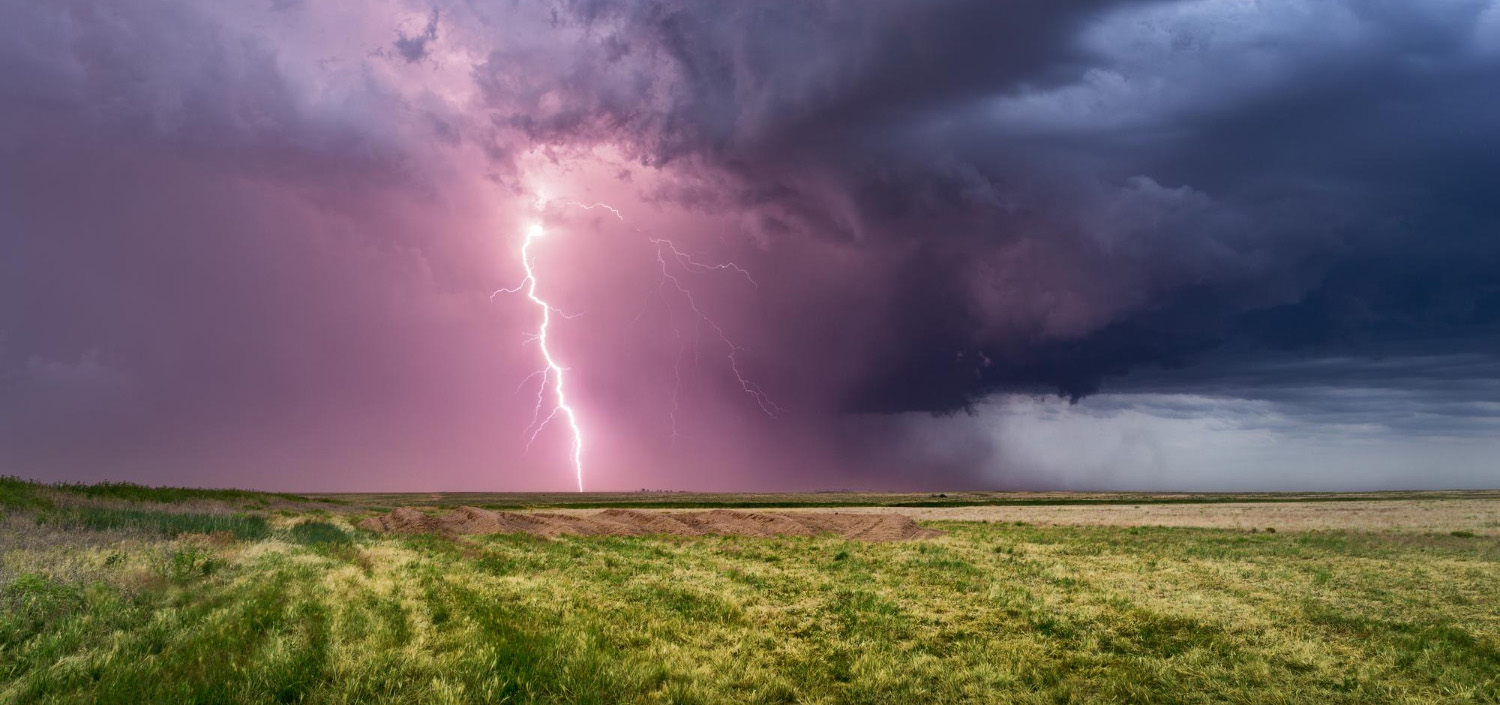
- Sometimes we have ‘extreme weather events’ such as tornadoes.
Victorian Curriculum Links
- Scientific knowledge is based on observations of the natural world using the senses, and scientific tools and instruments VC2S2H01
- Daily and seasonal changes in the weather and the environment can be observed and affect decisions made in everyday life VC2S2U07
- Materials can be combined in a variety of ways for particular purposes; the properties of objects and mixtures can differ from the properties of the materials from which they are made VC2S2U05
- Science is used by people in their daily lives, including asking questions and using patterns from observations of the world around them to make scientific predictions VC2S2H02
NSW Curriculum Links
- Recognises observable changes occurring in the sky and on the land and identifies Earth’s resources (ST1-10ES-S)
- Questions, plans and conducts scientific investigations, collects and summarises data and communicates using scientific representations (ST2-1WS-S)
- Describes how contact and non-contact forces affect an object’s motion (ST2-9PW-ST)
- Investigates regular changes caused by interactions between the Earth and the Sun, and changes to the Earth’s surface (ST2-10ES-S)
- Explains the effect of heat on the properties and behaviour of materials (ST3-6MW-S)
Australian Curriculum Links
- Identify sources of heat energy and examine how temperature changes when heat energy is transferred from one object to another (AC9S3U03)
- Investigate the observable properties of solids and liquids and how adding or removing heat energy leads to a change of state (AC9S3U04)
- Identify sources of water and describe key processes in the water cycle, including movement of water through the sky, landscape and ocean; precipitation; evaporation; and condensation (AC9S4U02)
- Examine how people use data to develop scientific explanations (AC9S3H01, AC9S4H01)
- Pose questions to explore observed patterns and relationships and make predictions based on observations (AC9S3I01, AC9S4I01)
Victorian Curriculum Links
- Observable changes occur in the sky and landscape; daily and seasonal changes affect everyday life (VCSSU046)
- Earth’s rotation on its axis causes regular changes, including night and day (VCSSU061)
- Participate in guided investigations, including making observations using the senses, to explore and answer questions (VCSIS051)
NSW Curriculum Links
- Recognises observable changes occurring in the sky and on the land and identifies Earth’s resources (ST1-10ES-S)
- Questions, plans and conducts scientific investigations, collects and summarises data and communicates using scientific representations (ST2-1WS-S)