











Kitchen Chemistry
- Level: Prep/Kinder to Year 2
- Duration: 60 or 90 minutes (90 minutes recommended)
- Numbers: Maximum of 30 students per workshop
- State: VIC & NSW
- Price
60 min: $450 per workshop
90 min: $560 per workshop
*Travel surcharge also applies based on location.
*Prices exclude GST.
*There is a minimum booking of 3 x 60 minute workshops or 2 x 90 minute workshops on the same day – or their cost equivalent.
"*" indicates required fields
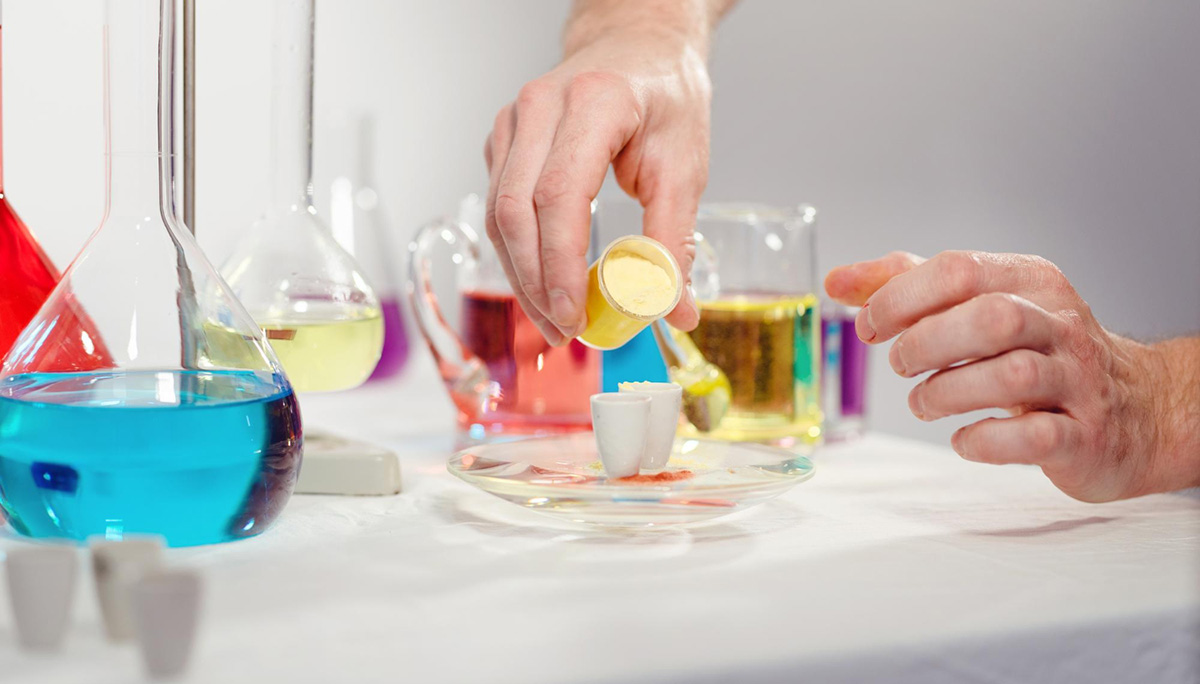
A fun food workshop challenging you to think about everyday food in a whole new way. Experiment with a variety of food-related chemicals, and you even get to take home a bag of sweet, tongue-tingling sherbet!
Activities
- Students observe the respiration of yeast, evidenced by the production and capture of carbon dioxide.
- Students use an indicator to identify an acid and a base. They observe the process of neutralisation by mixing an acid and base together.
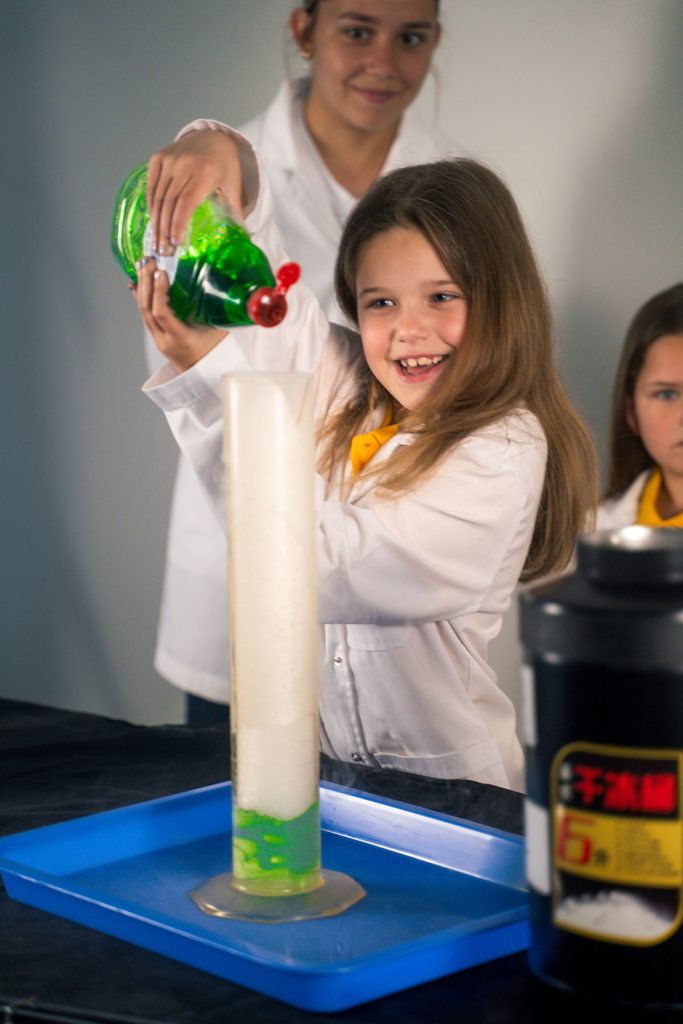
- Demonstration of a chemical reaction using kitchen chemicals that produce carbon dioxide gas.
- Students perform a similar chemical reaction and observe what happens when the gas pressure is allowed to build up. They feel the temperature of the chemical reaction.
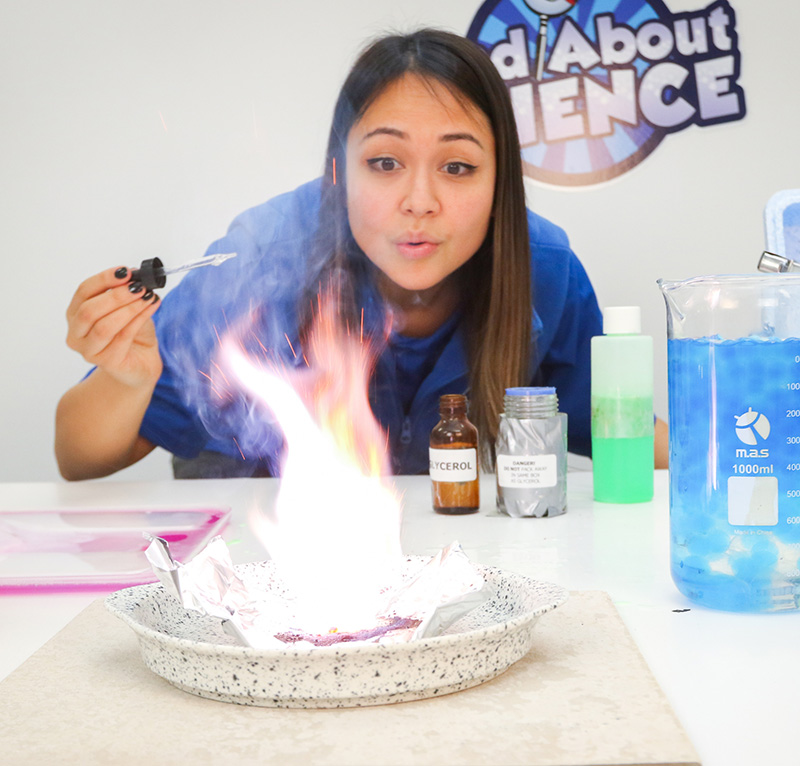
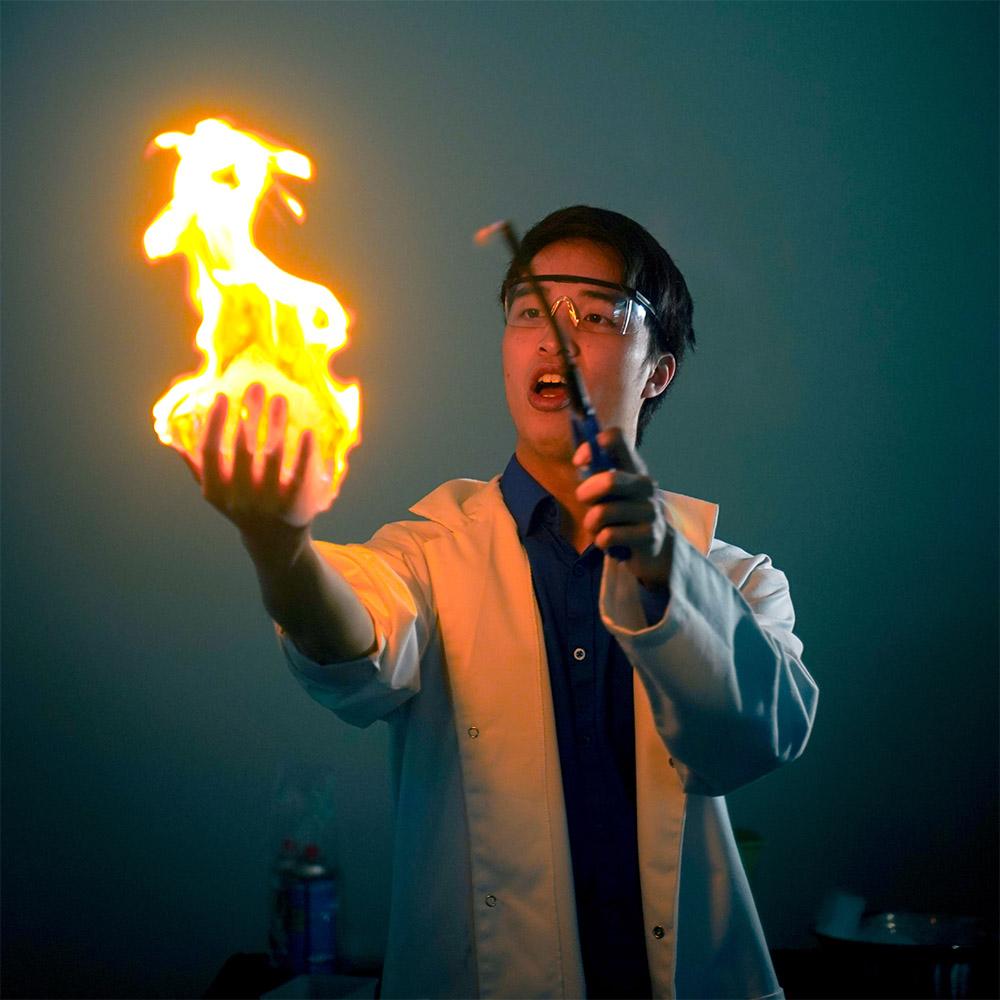
- Demonstration of a chemical reaction that produces heat and light energy.
- Make and eat sherbet, noting the ‘fizzy’ sensation produced by the chemical reaction.
90 minute workshops also include these activities:
- Students observe how the acid in a citrus fruit can be used to generate electricity and power a device.
- Students use food colouring to observe the effect of disrupting the surface tension of milk.
Learning Outcomes
- Observe the process of respiration in yeast.
- Explore how cabbage juice can be used as a natural litmus test for acids and bases.
- Investigate how detergent can be used as an inhibitor.
- Observe how baking soda and vinegar react to form carbon dioxide through a chemical reaction.
- Learn how to make sherbet through simple chemical reactions.
Victorian Curriculum Links
- Objects can be made of one or more different materials; these materials have observable properties VC2S2U04
- Materials can be combined in a variety of ways for particular purposes; the properties of objects and mixtures can differ from the properties of the materials from which they are made VC2S2U05
- Materials can be changed physically by different actions without changing their material composition, including by bending, twisting, stretching, crushing, squashing and breaking into smaller pieces VC2S2U06
- Science is used by people in their daily lives, including asking questions and using patterns from observations of the world around them to make scientific predictions VC2S2H02
- Experiences can be used as a basis for posing questions to explore observed patterns and relationships, and to make predictions VC2S2I01
- Scientific questions and predictions can be investigated safely by following procedures that have sequenced steps VC2S2I02
NSW Curriculum Links
- Identifies that objects are made of materials that have observable properties (STe-4MW-ST)
- Identifies that materials can be changed or combined (ST1-6MW-S)
- Questions, plans and conducts scientific investigations, collects and summarises data and communicates using scientific representations (ST2-1WS-S)
- Identifies how plants and animals are used for food and fibre products (ST1-5LW-T)
- Describes how the properties of materials determine their use (ST1-7MW-T)
Australian Curriculum Links
- People use science in their daily lives, including when caring for their environment and living things (ACSHE035)
- Objects are made of materials that have observable properties (ACSSU003)
- Everyday materials can be physically changed or combined with other materials in a variety of ways for particular purposes (ACSSU018)
- Participate in guided investigations, including making observations using the senses, to explore and answer questions (ACSIS025)