











Robotics and Coding
- Level: Year 2 to Year 6
- Duration: 90 minutes, also available as a series
- Numbers: Maximum of 30 students per workshop
- State: VIC & NSW
- Price
$560 per 90 minute workshop
*Travel surcharge also applies based on location.
*Prices exclude GST.
"*" indicates required fields
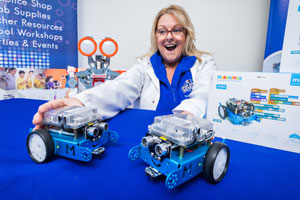
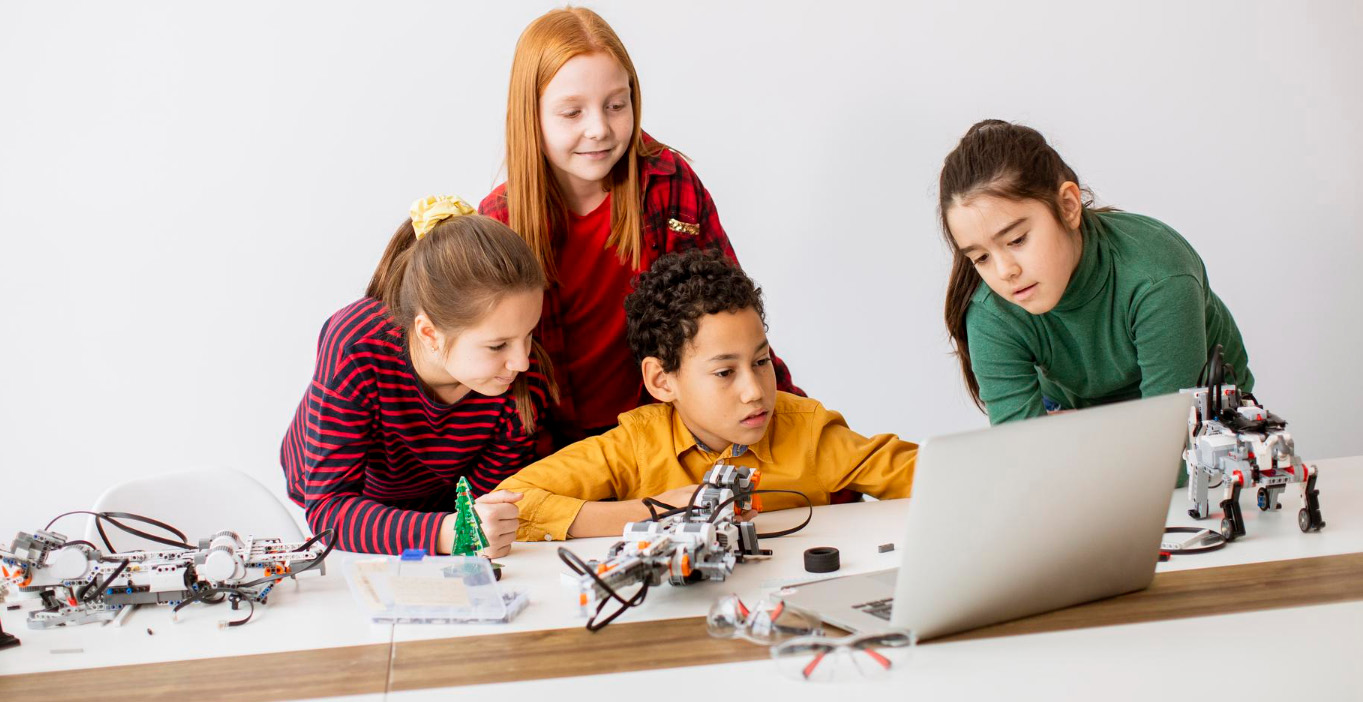
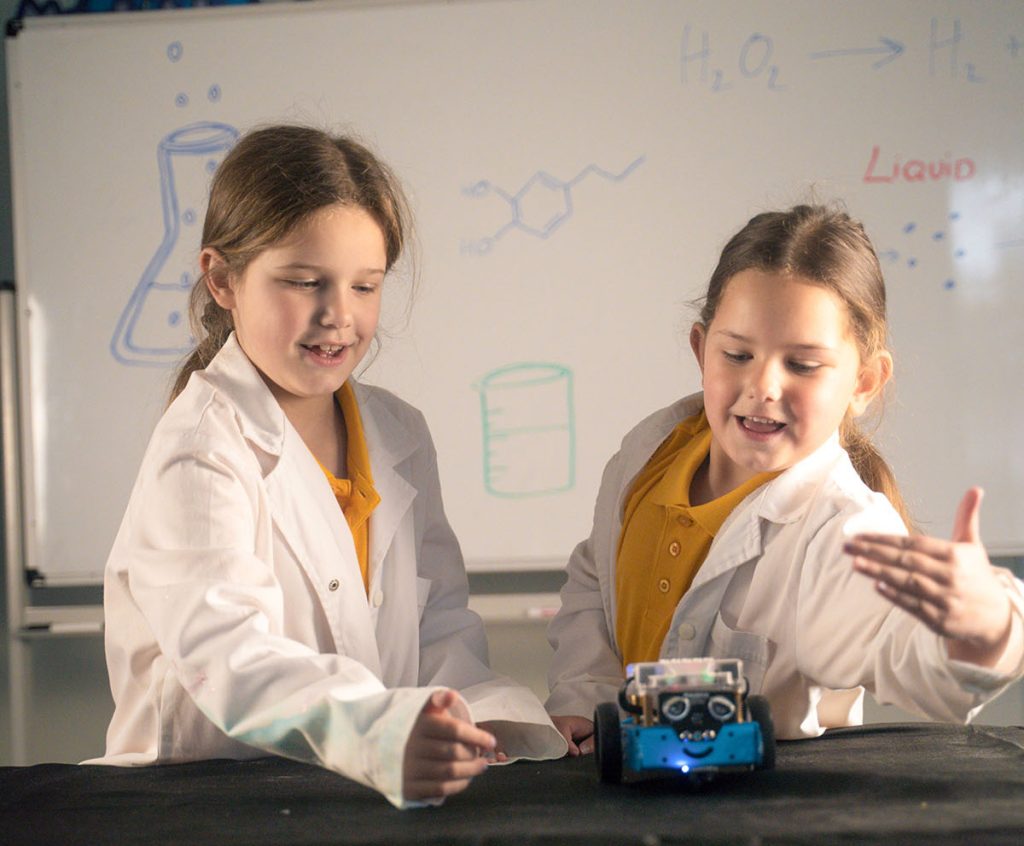
In this exciting workshop, students will work in pairs to build and program real robots. Our robotics kits will keep students engaged from beginner to advanced, and teachers may learn something too! This workshop uses a pen-and-card-based programming system, so no computers are required. Robots can also be programmed with Scratch if laptops are available.
Activities
-
Single workshop | 1 x 90 minute session
Build and program a robot using lights, sensors and motors. This is our taste tester workshop where students will build and program a robot and experience the excitement of robotics! This workshop can be upgraded to a series, because we guarantee they will want more! -
Half term | 5 x 90 minute sessions
We have packed all the fundamentals into this 5-week robotics crash course. A new topic is covered each week (outputs, inputs, motors, mechanics, programming logic) putting it all together in the final week! -
Full term | 8 x 90 minute sessions
This series is for students who want the full package! Each component will be covered in its own session, allowing for a more slow and steady pace, and giving students all the tools they need to create their own bot in the final session. This is a more in-depth look at robots, the parts used to make them, and the programming needed to bring them to life. In this series, we cover the following: introduction, lights, contact sensors, motors, gears, sound, infrared sensors, mechanical linkage, programming, logic, and build your own!
Learning Outcomes
- Explore how robots can be used to help improve our lives.
- Understand that robots combine mechanics, electronics and programming into one system.
- Develop troubleshooting, problem-solving and collaboration skills through robotics.
- Identify electronic components used in robots, including lights, motors and sensors.
- Learn the difference between inputs and outputs, such as sensors and actuators.
- Explore mechanical systems used in robotics, including gears and bar linkages.
- Recognise that there are many different ways to solve a problem using robotics.
Victorian Curriculum Links
- Explore how technologies affect movement in products and systems (VC2TDE2C01)
- Identify and explore digital systems including hardware and software components for a purpose (VC2TDI2S01)
- Follow, describe and represent algorithms involving a sequence of steps, branching (decisions) and iteration (repetition) needed to solve simple problems (VC2TDI2C02)
- Follow, describe and represent algorithms involving sequencing, comparison operators (branching) and iteration (VC2TDI4C02)
- Implement simple algorithms as visual programs involving control structures and input (VC2TDI4C04)
- Explain how electrical energy can be transformed into movement, sound or light in a product or system (VC2TDE6C01)
- Implement algorithms as visual programs involving control structures, variables and input (VC2TDI6C04)
NSW Curriculum Links
- Describes how digital systems represent and transmit data (ST2-11DI-T)
- Explains how digital systems represent data, connect together to form networks and transmit data (ST3-11DI-T)
- Selects and uses materials, tools and equipment to develop solutions for a need or opportunity (ST2-2DP-T)
- Defines problems, describes and follows algorithms to develop solutions (ST2-3DP-T)
- Plans and uses materials, tools and equipment to develop solutions for a need or opportunity (ST3-2DP-T)
- Defines problems, and designs, modifies and follows algorithms to develop solutions (ST3-3DP-T)
Australian Curriculum Links
- Recognise and explore digital systems (hardware and software components) for a purpose (