











- Level: Year 3 to Year 6
- Duration: 60 or 90 minutes (90 minutes recommended)
- Numbers: Maximum of 30 students per workshop
- State: VIC ONLY
- Price
60 min: $450 per workshop
90 min: $560 per workshop
*Travel surcharge also applies based on location.
*Prices exclude GST.
*There is a minimum booking of 3 x 60 minute workshops or 2 x 90 minute workshops on the same day – or their cost equivalent.
"*" indicates required fields
Technology ignites innovation and advancements in industry. Students explore innovation over time, and engage in activities to understand how technology including Artificial Intelligence (AI) works and its applications in everyday lives and industry.
Activities
- Students explore innovation and the importance of innovation in our world.
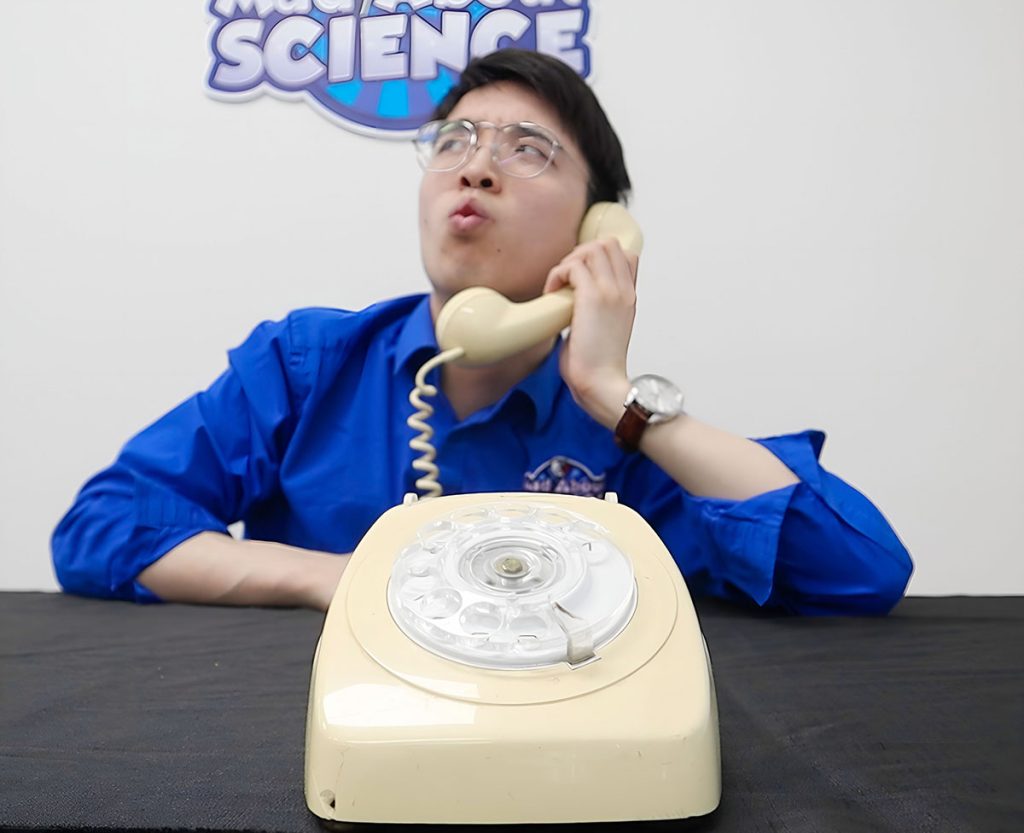
- Students explore how technology has evolved over time in the way messages are communicated.
- Students use decoding skills to interpret, understand, and send messages. This includes an explanation and demonstration of how fibre optics work in communicating messages.
- Students learn about Artificial Intelligence and some of its real-world applications. Students interact with AI technology by trying to race or beat an AI program.
- Students work in pairs to explore, in an engaging and practical way, that a computer can only do what it is told to do.
- Students become both computers and programmers, exploring how accurate instruction commands are essential for a computer to successfully perform a task.
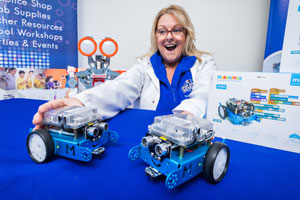
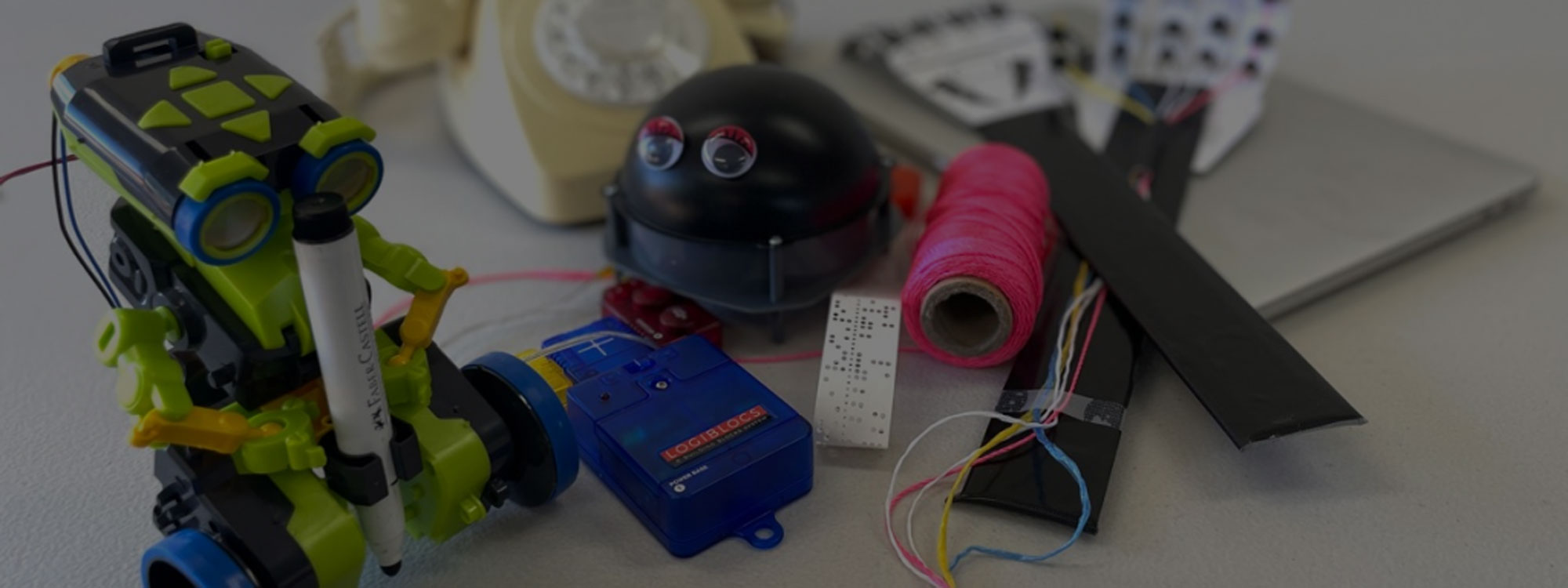
- Students engage with the Tech and AI Exploration Tables, including circuits, sensors and modules, a robot obstacle course, evolution of innovation and technology, quick draw – “be the computer”, AI facial or colour recognition, and the biomimicry test station.
90 minute workshop also includes the following:
- Students explore the concept of biomimicry and use materials to build and or test a robotic hand.
Learning Outcomes
- Understand how technology has changed over time.
- Learn what AI is and where its place lies in society and industry.
- Understand how computers work.
- Explore biomimicry and how technology is based on the natural world around us.
Victorian Curriculum Links
- Scientific knowledge, skills and data can be used by people to explain how they will meet a need or solve a problem VC2S4H02
- Scientific investigations to answer questions or test predictions can be planned and conducted using provided scaffolds, including identifying the attributes of fair tests, and considering the safe use of materials and equipment VC2S4I02
- Explore and describe a range of digital systems and their peripherals for a variety of purposes VC2TDI4S01
- Recognise different types of data and explore how the same data can be represented differently depending on the purpose VC2TDI4D01
- Follow, describe and represent algorithms involving sequencing, comparison operators (branching) and iteration VC2TDI4C02
- Scientific knowledge changes over time, often resulting from collaboration or by building on the work of others, and leads to advances in science VC2S6H01
- Scientific knowledge, skills and data can be used by individuals and communities to identify problems, consider responses and make decisions VC2S6H02
- Materials may be electrical insulators or conductors; energy can be transferred and transformed in electrical circuits where the components of a circuit play particular roles in the function of the circuit VC2S6U09
- Repeatable scientific investigations to answer questions can be planned and conducted, including, as appropriate, deciding the variables to be changed, measured and controlled in fair tests, considering potential risks, planning for the safe and ethical use of equipment and materials, and obtaining permissions for investigations conducted on Country and Place or in protected areas VC2S6I02
- Design and represent algorithms involving multiple alternatives (branching) and iteration VC2TDI6C02