









Heat & Energy
- Level: Year 3 to Year 6
- Duration: 60 or 90 minutes (90 minutes recommended)
- Numbers: Maximum of 30 students per workshop
- State: VIC & NSW
- Price
60 min: $450 per workshop
90 min: $560 per workshop
*Travel surcharge also applies based on location.
*Prices exclude GST.
*There is a minimum booking of 3 x 60 minute workshops or 2 x 90 minute workshops on the same day – or their cost equivalent.
"*" indicates required fields
Turn up the heat! Create heat through friction, movement, electricity, and chemical reactions—then see how it moves, measure it, and watch it transform the world around you.
Activities
- Observe a demonstration of the transformation of solar energy into electrical energy and then kinetic energy.
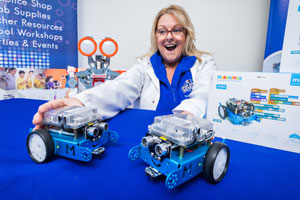
- Students build various electrical circuits and observe the energy transformations taking place.
- Observe a demonstration of the affect of heat on the state of matter.
- Students use a thermometer to measure temperature, and compare the movement of particles in hot and cold water.
- Observe the demonstrations of heat conduction and radiation.
- Demonstration of a tea bag rocket as an example of convection.
- Students conduct an endothermic chemical reaction and feel the changes in heat.
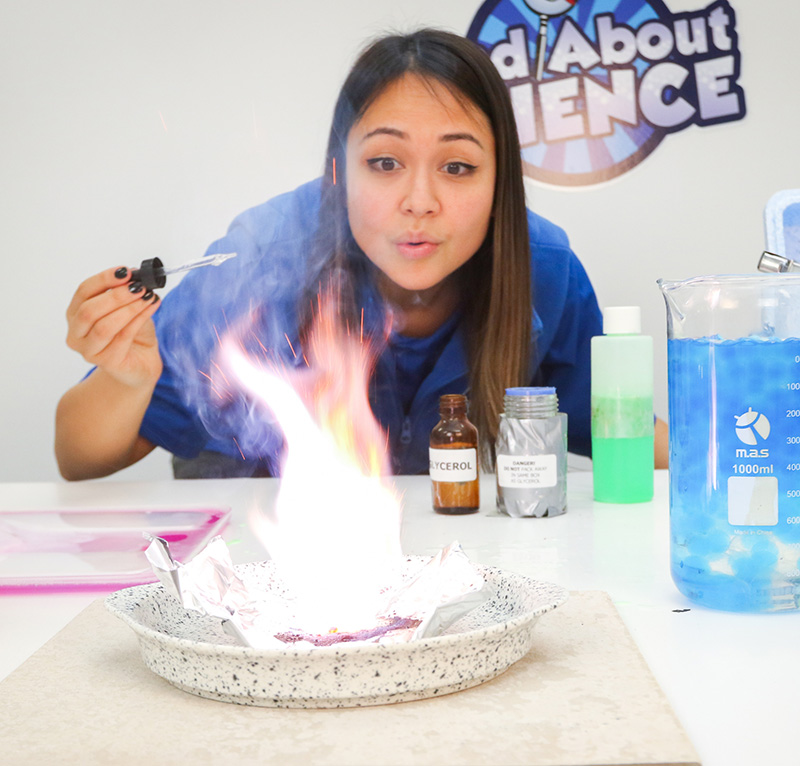
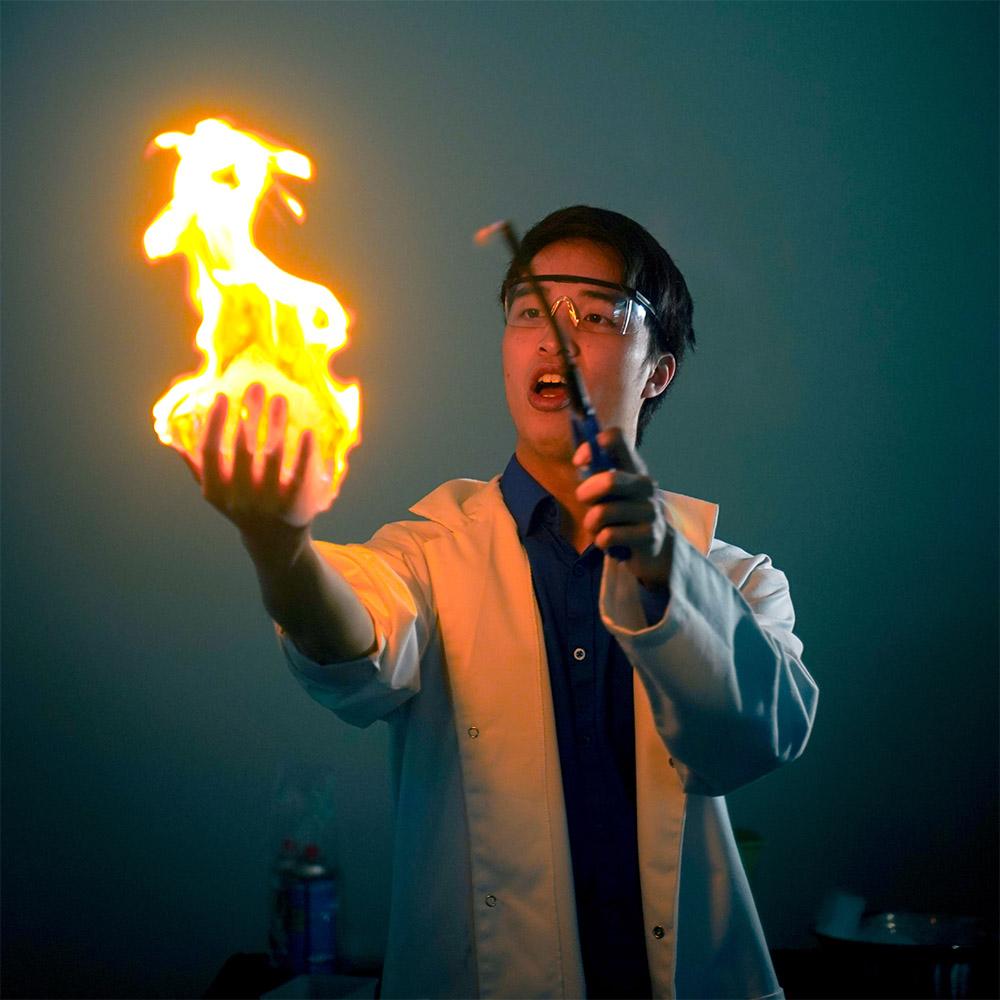
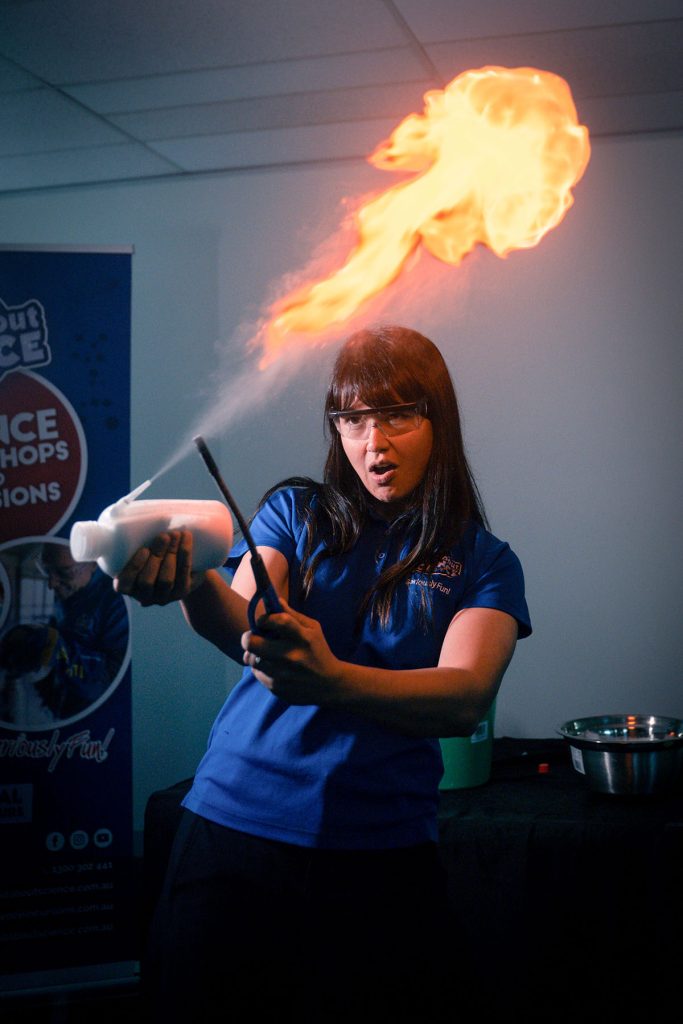
- Observe a fiery exothermic combustion reaction.
90 minute workshops also include these activities:
- Students observe the effect of temperature on density.
- A second memorable exothermic combustion reaction.
Learning Outcomes
- Explore what energy is, why it is important, and identify different forms of energy.
- Understand the difference between potential energy (stored energy) and kinetic energy (energy of movement).
- Recognise heat as a form of energy and understand that particles move faster as materials get hotter.
- Understand how heat causes solids to melt and liquids to evaporate as particles separate and move apart.
- Learn that temperature is a measure of the average heat energy of particles in a material.
- Investigate heat transfer through direct contact, known as conduction.
- Explore how heat moves through liquids and gases by convection, forming convection currents.
- Understand that heat travels through space as radiation, and that darker materials absorb more heat while lighter materials reflect it.
- Investigate chemical reactions that either release heat energy or absorb heat energy from their surroundings.
- Understand that combustion reactions release large amounts of heat energy and require oxygen, fuel and an initial heat source.
Victorian Curriculum Links
- Data from observations obtained through scientific inquiry can be used to develop explanations of natural phenomena VC2S4H01
- Solids, liquids and gases have observable properties; adding or removing heat energy leads to a change of state between solids, liquids and gases VC2S4U04
- The observable properties of matter (solids, liquids and gases) can be explained by modelling the motion and arrangement of their particles; mixtures (including solutions) can be formed by combining 2 or more different substances VC2S6U03
- Water is an important Earth resource that originates from various sources; water cycles through the environment by moving through the sky, landscape and ocean, and involves processes including precipitation, evaporation, transpiration, condensation, melting, freezing, crystallisation, infiltration and run-off VC2S4U07
- Heat energy can be generated from different sources; temperature changes may happen when heat is transferred from one object to another VC2S4U09
- Observations, including formal measurements, can be made and recorded by following procedures to use familiar scaled instruments and digital tools as appropriate VC2S4I03
- Equipment can be used to observe, generate, measure and record data with reasonable precision for repeated measurements, using digital tools as appropriate VC2S6I03
NSW Curriculum Links
- Explains the effect of heat on the properties and behaviour of materials (ST3-6MW-S)
- Describes how adding or removing heat causes a change of state (ST2-6MW-S)
- Describes the characteristics and effects of common forms of energy, such as light and heat (ST2-8PW-ST)
- Explains how energy is transformed from one form to another (ST3-8PW-ST)
- Explains how the properties of materials determine their use for a range of purposes (ST3-7MW-T)
- Investigates the effects of increasing or decreasing the strength of a specific contact or non-contact force (ST3-9PW-ST)
- Plans and conducts scientific investigations to answer testable questions, and collects and summarises data to communicate conclusions (ST3-1WS-S)
- Describes how digital systems represent and transmit data (ST2-11DI-T)
Australian Curriculum Links
- A change of state between solid and liquid can be caused by adding or removing heat (ACSSU046)
- Solids, liquids and gases have different observable properties and behave in different ways (ACSSU077)
- Heat can be produced in many ways and can move from one object to another (ACSSU049)
- Electrical energy can be transferred and transformed in electrical circuits and generated from a range of sources (ACSSU097)
- Consider the elements of fair tests and use formal measurements and digital technologies to record observations accurately (ACSIS055)
- With guidance, plan and conduct scientific investigations to find answers to questions, considering safe use of materials and equipment (ACSIS054)