










Sound Sensation
- Level: Foundation/Kinder to Year 3
- Duration: 60 or 90 minutes (90 minutes recommended)
- Numbers: Maximum of 30 students per workshop
- State: VIC & NSW
- Price
60 min: $450 per workshop
90 min: $560 per workshop
*Travel surcharge also applies based on location.
*Prices exclude GST.
*There is a minimum booking of 3 x 60 minute workshops or 2 x 90 minute workshops on the same day – or their cost equivalent.
"*" indicates required fields
Get ready to tune into the science of sound! From whispering secrets to booming beats, you’ll discover how we use vibrations to communicate in fun and fascinating ways. Listen up as our presenters explain the physics of sound- it will be music to your ears!
Activities
- Students explore their sense of hearing through a blindfold class game, as the presenter strikes, taps, scrunches, and shakes different objects.
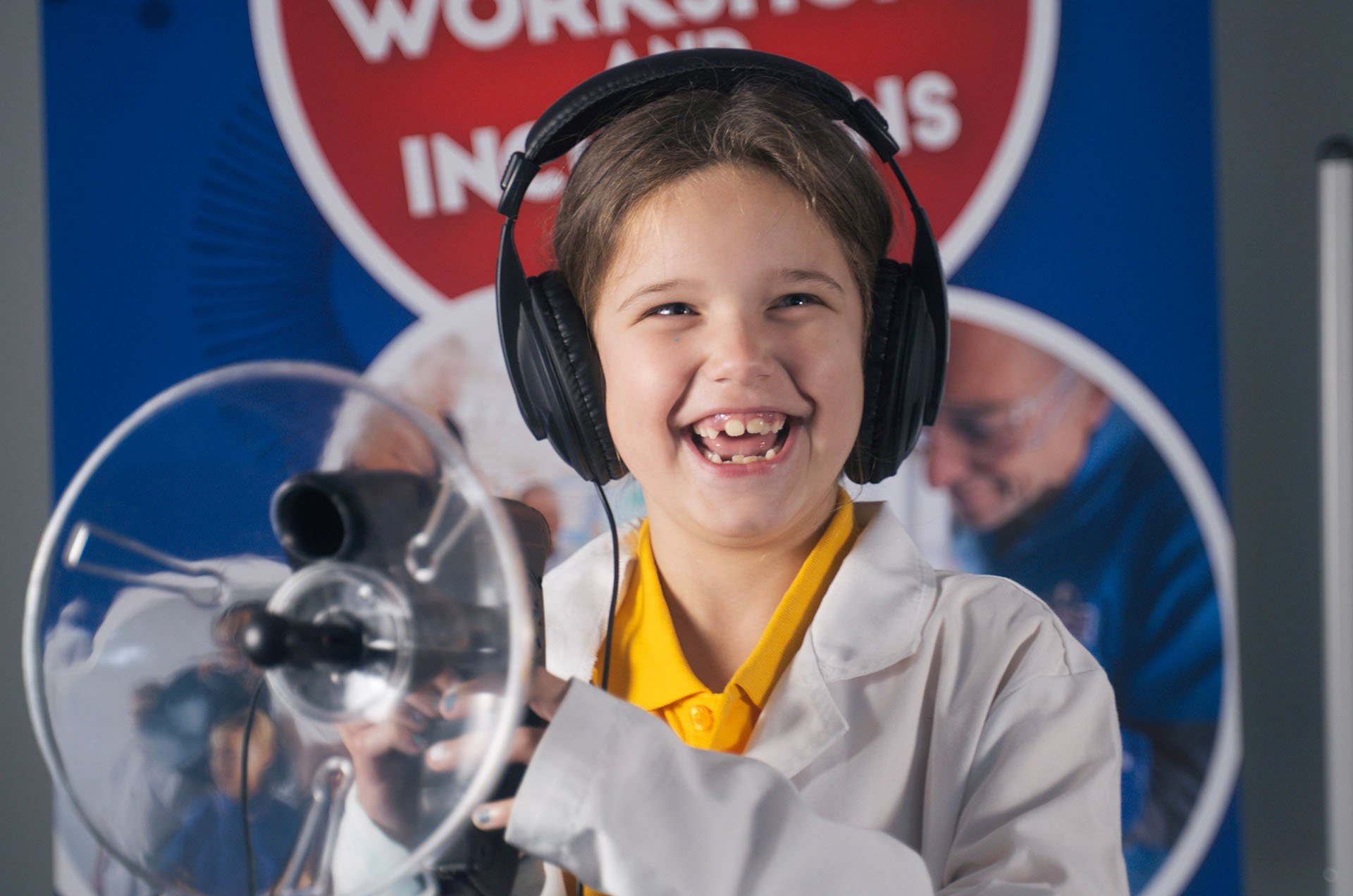
- Students learn how the human ear works and compare human hearing to ears across the animal kingdom.
- Students investigate how sound travels through different materials in a fun, hands-on activity.
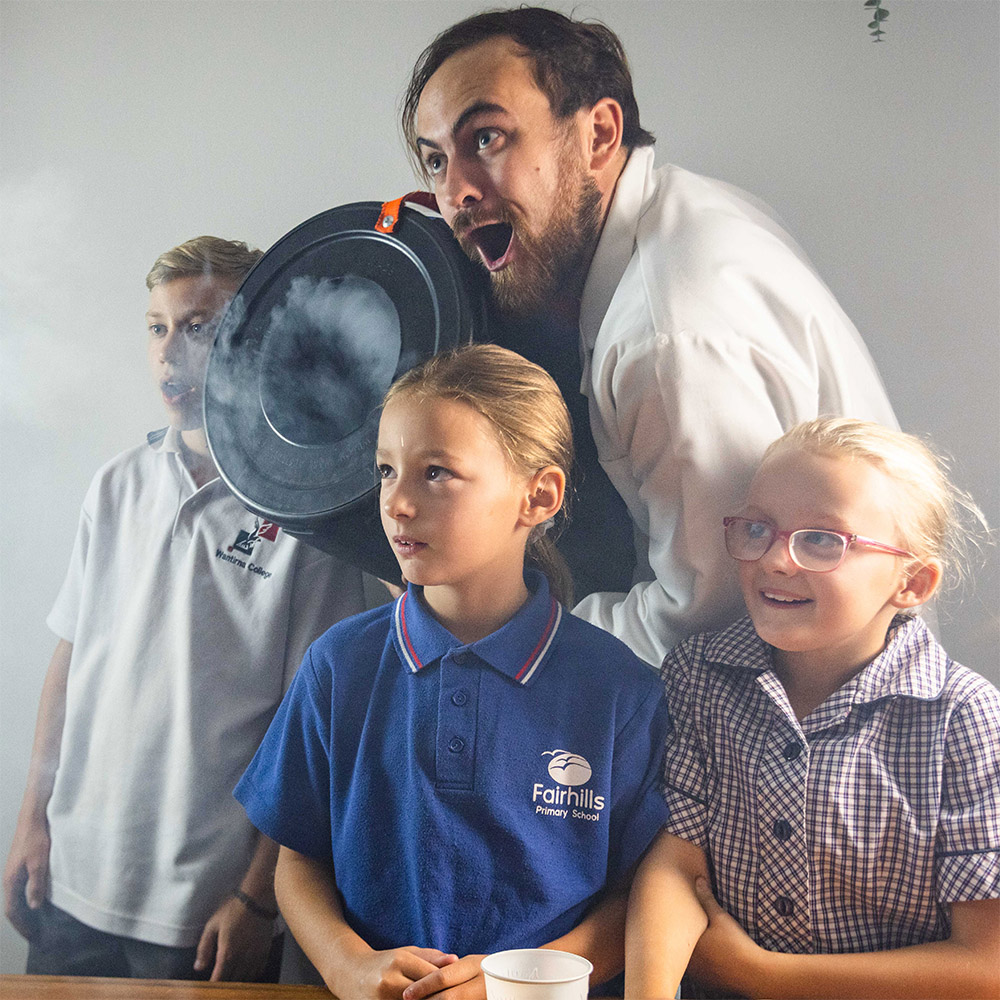
- Students observe how sound moves and “dances” in a group demonstration using a special speaker.
- Students construct a fun-sounding sci-fi laser beam in a cup.
- Students learn how Indigenous Australians communicated in the past and use sound tubes to explore sound and pitch.
90 minute workshops also include:
- Students learn that sound is a form of energy and can transform into other types of energy through a fun and noisy activity using tuning forks, ping pong balls, and water.
Learning Outcomes
- Understand that sound is a vibration that travels in waves.
- Explore how sound can travel through solids, liquids and gases, but cannot travel through the vacuum of space.
- Understand that pitch describes how high or low a sound is and is measured in frequency (Hertz).
- Understand that volume describes how loud or soft a sound is and is measured in decibels (dB).
- Recognise that the senses are used to learn about the world around us.
- Explore how the human ear works and compare different animal ear shapes.
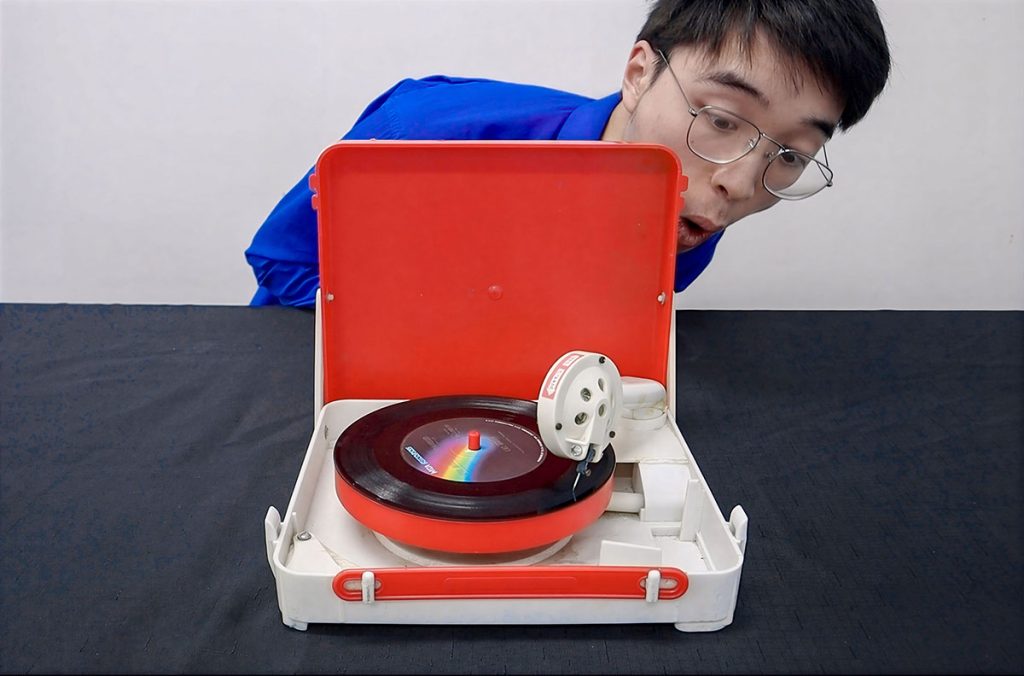
- Investigate different ways to produce sound using familiar objects and actions such as striking, blowing, scraping and shaking.
- Explore how traditional technologies used by Aboriginal and Torres Strait Islander Peoples produce their characteristic sounds.
Victorian Curriculum Links
- Scientific knowledge is based on observations of the natural world using the senses, and scientific tools and instruments (VC2S2H01)
- Objects can be made of one or more different materials; these materials have observable properties (VC2S2U04)
- The way objects move depends on a variety of factors including their size, shape and material (VC2S2U10)
- Sound can make materials vibrate and vibrating materials can make sound; different actions can be used to produce sounds of varying pitch and volume (VC2S2U12)
- Observations can be compared to predictions and the observations of others, which may lead to further questions being identified (VC2S2I05)
- The properties of natural and made materials, including fibres, metals, glass and plastics, influence their use and re-use (VC2S4U05)
- Forces, including frictional, gravitational, electrostatic and magnetic, can be exerted by one object on another through direct contact or from a distance and affect the motion (speed and direction) of objects (VC2S4U10)
NSW Curriculum Links
- Observes, questions and collects data to communicate ideas (SCLS-WS-01)
- Describes how objects are made of materials with observable properties (SCLS-MAT-01)
- Describes the effects of pushes and pulls in everyday situations (SCLS-FOR-01)
- Describes common forms of energy and explores characteristics of sound energy (SCLS-ENE-01)
- Describes how light and sound are produced and sensed (ST1-8PW-S)
- Identifies that Aboriginal and Torres Strait Islander Peoples use observations and technologies to understand and interact with the natural world (SCLS-STC-01)
Australian Curriculum Links
- Light and sound are produced by a range of sources and can be sensed (ACSSU020)
- Objects are made of materials that have observable properties (ACSSU003)
- Science involves observing, asking questions about, and describing changes in, objects and events (ACSHE034)
- Participate in guided investigations to explore and answer questions (ACSIS025)
- Compare observations with those of others (ACSIS213)
- Different materials can be combined for a particular purpose (ACSSU031)
- First Nations Australians’ ways of life reflect unique ways of being, knowing, thinking and doing (A_TSIC2)