











Cosmic Chemistry Show
- Level: Year 1 to Year 6
- Duration: 60 minute show
- Numbers: Suitable for up to 240 students
- Price: $1,695
- State: VIC & NSW
*Travel surcharge also applies based on location.
*Prices exclude GST.
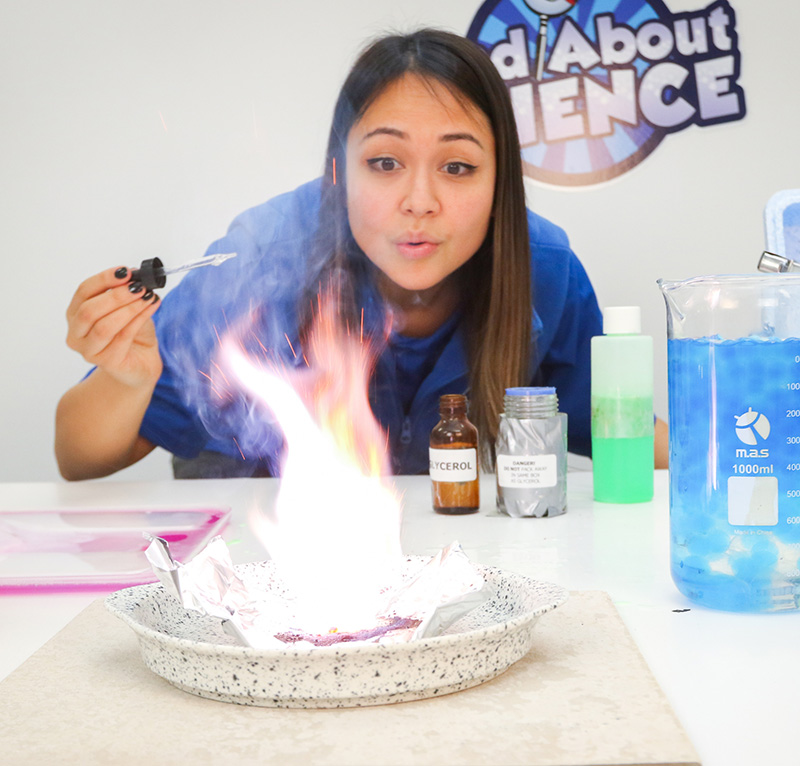
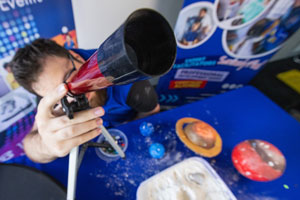
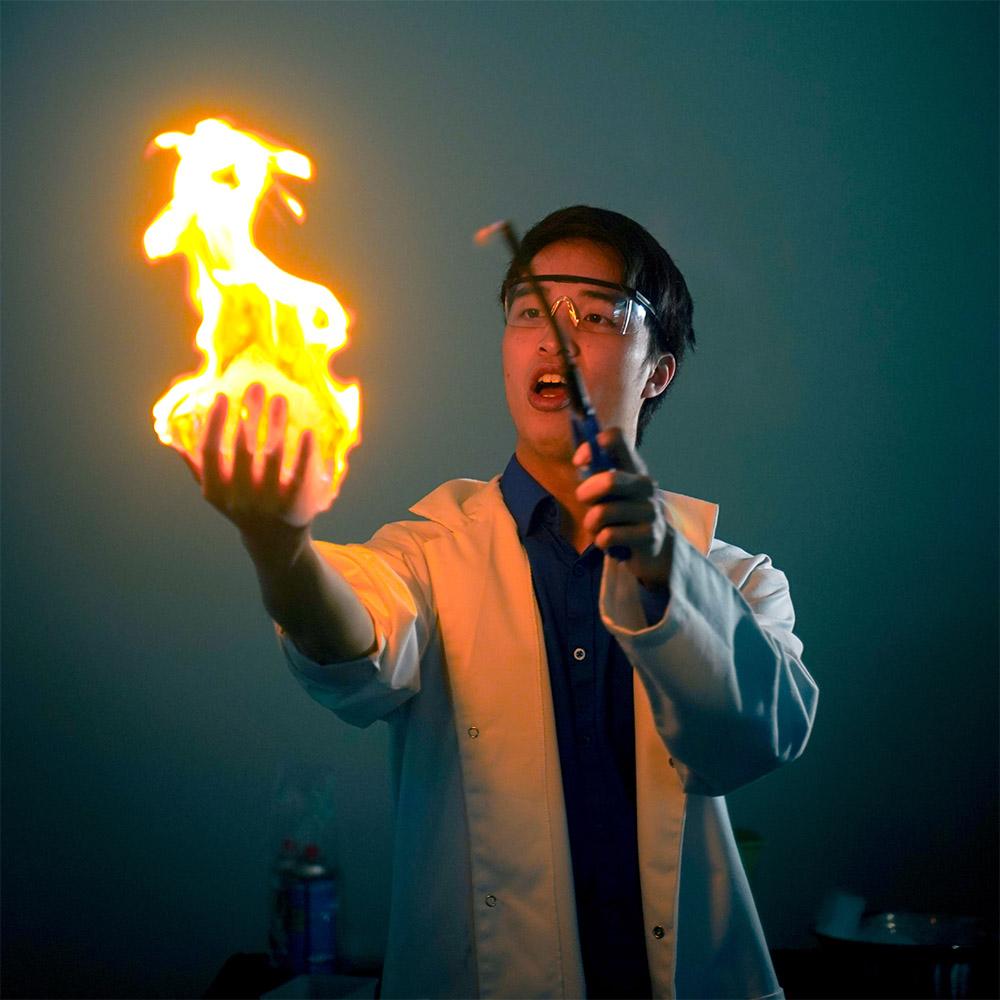
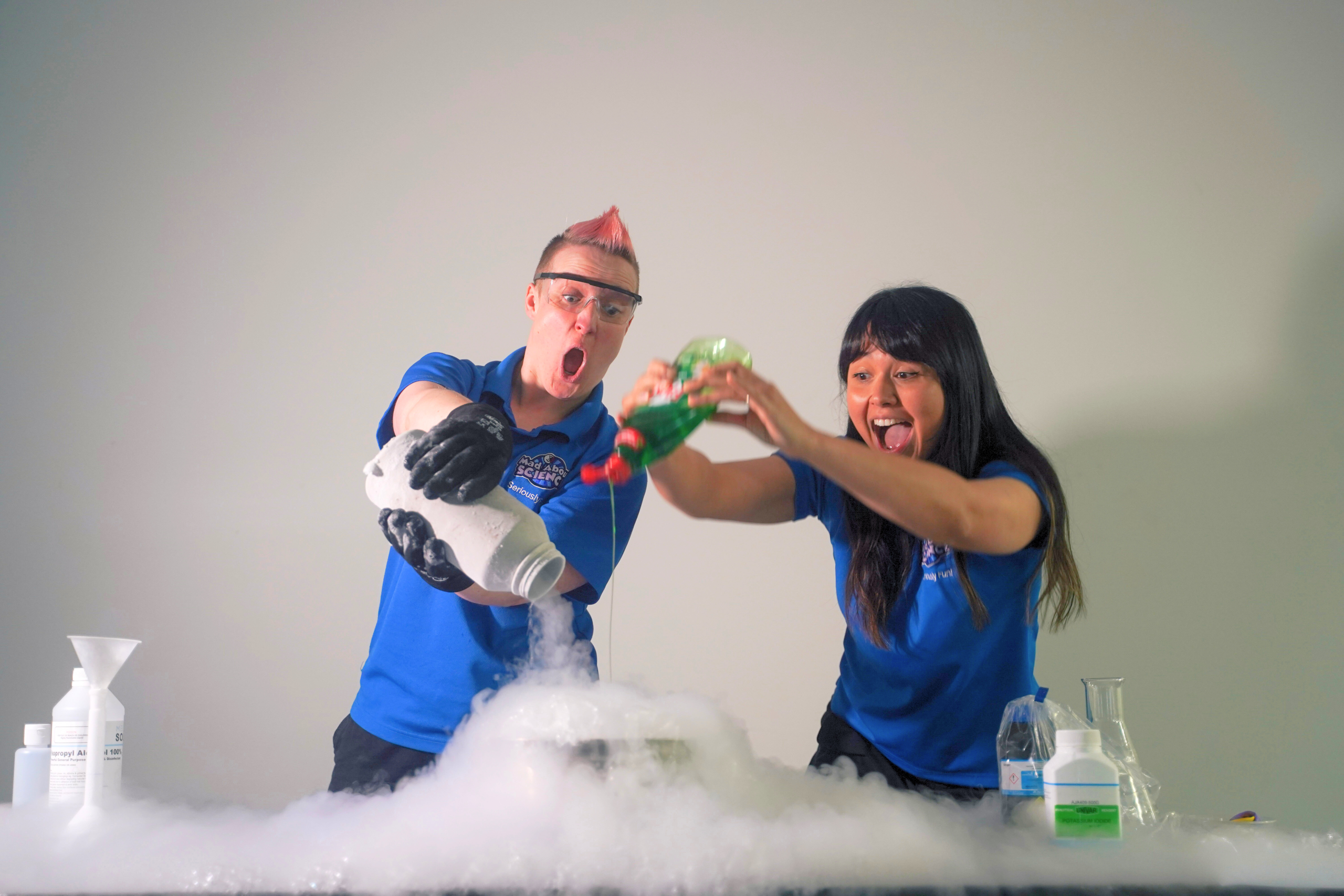
Join us for an out-of-this-world experience as we embark on an epic journey through space! Witness explosive big bangs, count down to exciting rocket launches, and discover what makes our blue planet, Earth, truly special. We’ll take the students to the icy corners of the universe and the hottest, most uninhabitable planets. Vacuum sealed with lots of volunteer moments- let our experienced presenters bring the wonders of the solar system to life in this exciting 60-minute show.
Cosmic Chemistry Demonstrations
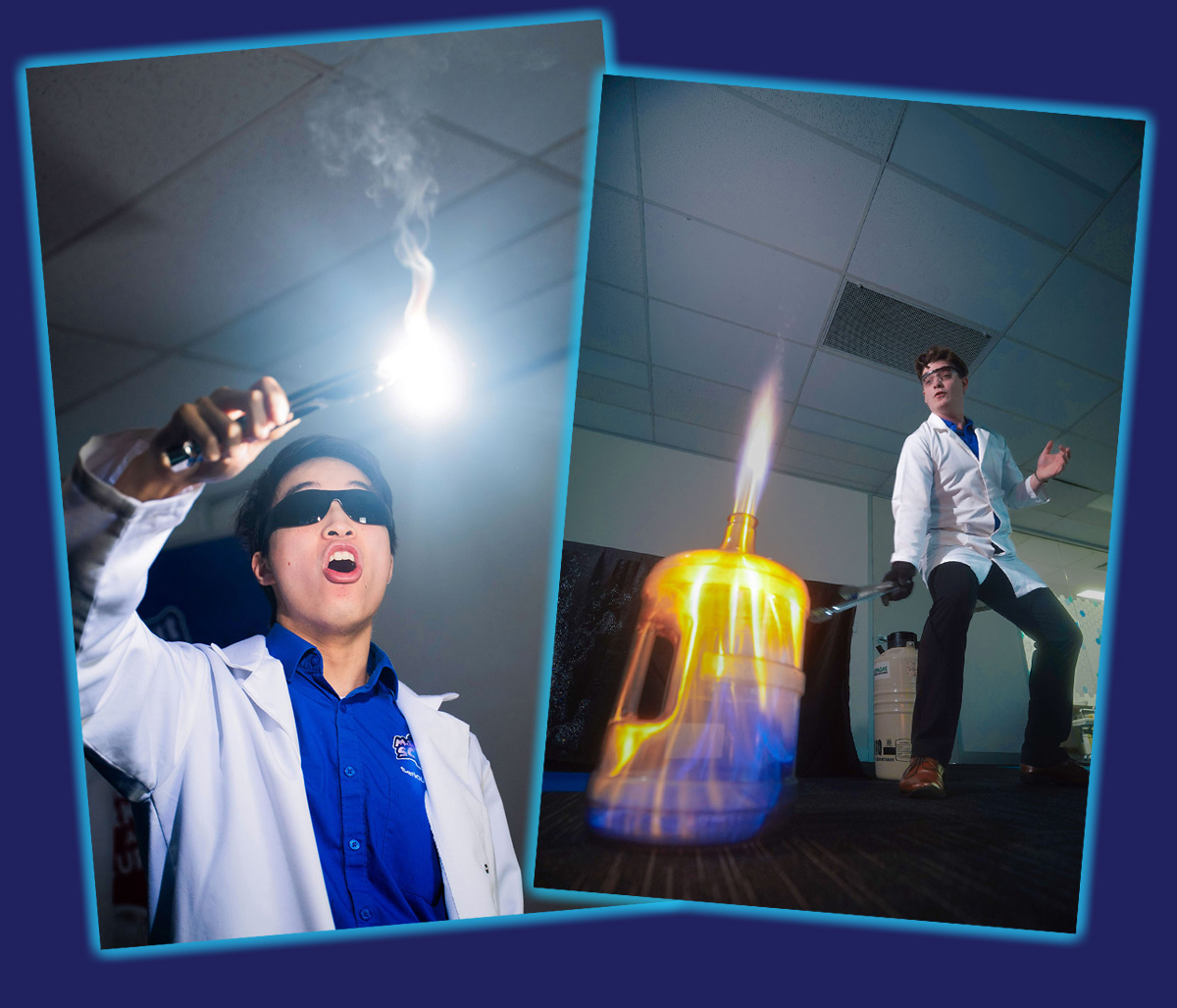
- Hot and gassy cosmic elephant’s toothpaste
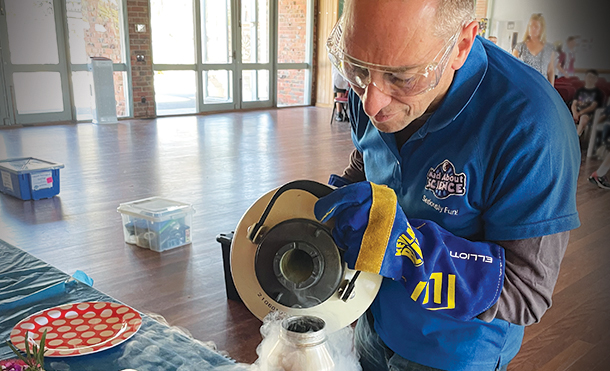
- Super cool sub-zero demonstrations (Liquid Nitrogen for VIC shows)
- BIG BANG explosions
- Epic rockets with big countdowns
- Dazzling, bright and colourful stars
- Plenty of FUN volunteer moments for the audience
Learning Outcomes
- Explore Bernoulli’s principle and understand the basic principles of flight.
- Understand that fire requires three elements: oxygen, heat energy and fuel.
- Recognise that chemical reactions create new substances and are often irreversible.
- Understand that some chemical reactions release large amounts of energy and are called exothermic reactions.
- Identify different push and pull forces and how they affect motion.
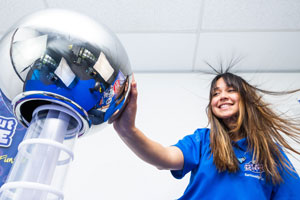
- Understand that static electricity occurs when electrons build up in one place.
- Understand that current electricity occurs when electrons flow through a circuit.
Victorian Curriculum Links
- Solids, liquids and gases have observable properties; adding or removing heat energy leads to a change of state (VC2S4U04)
- Heat energy can be generated from different sources; temperature changes may occur when heat is transferred (VC2S4U09)
- Water cycles through the environment and involves processes including precipitation, evaporation and condensation (VC2S4U07)
- Forces, including frictional, gravitational, electrostatic and magnetic, can act through contact or at a distance (VC2S4U10)
- The observable properties of matter can be explained by modelling particle motion; mixtures can be formed by combining substances (VC2S6U03)
- Cyclic observable phenomena can be related to Earth’s tilt, rotation and revolution around the Sun (VC2S6U07)
- Light can be produced from many sources and can be absorbed, transmitted, reflected or refracted (VC2S6U08)
NSW Curriculum Links
- Working scientifically – Observing: Uses senses and scientific tools to make observations (SCLS-WS-01)
- Working scientifically – Questioning and predicting: Develops questions and hypotheses for scientific investigation (SC5-WS-02)
- Describes the effects of forces in everyday contexts (SC4-FOR-01)
- Describes a range of reaction types (SC5-RXN-01)
Australian Curriculum Links
- A push or a pull affects how an object moves or changes shape (ACSSU033)
- Forces can be exerted by one object on another through direct contact or from a distance (ACSSU076)
- Heat can be produced in many ways and can move from one object to another (ACSSU049)
- Changes to materials can be reversible or irreversible (ACSSU095)
- Electrical energy can be transferred and transformed in electrical circuits and can be generated from a range of sources (ACSSU097)
- Science involves observing, asking questions about, and describing changes in objects and events (ACSHE034)
- Pose and respond to questions, and make predictions about familiar objects and events (ACSIS037)
- Compare observations with those of others (ACSIS041)
"*" indicates required fields