











Extraordinary
Elements Show
- Level: Suitable for years 7 to 12
- Duration: 60 minute show
- Numbers: Suitable for up to 240 students
- State: VIC ONLY
- Price: $1,695
*Travel surcharge also applies based on location.
*Prices exclude GST.
"*" indicates required fields
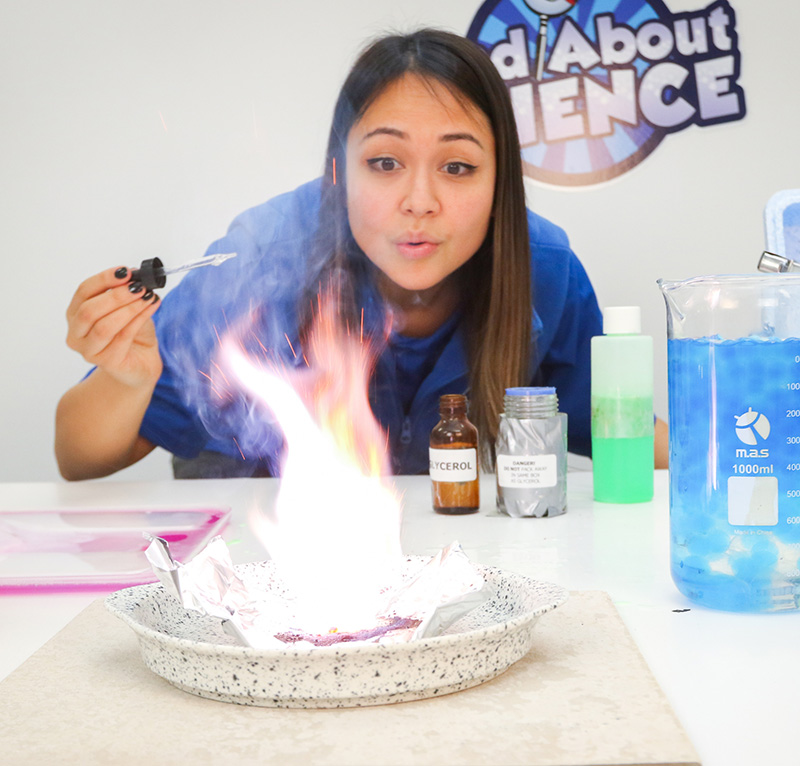
An explosive science show for secondary schools unveiling the wonders of the periodic table!
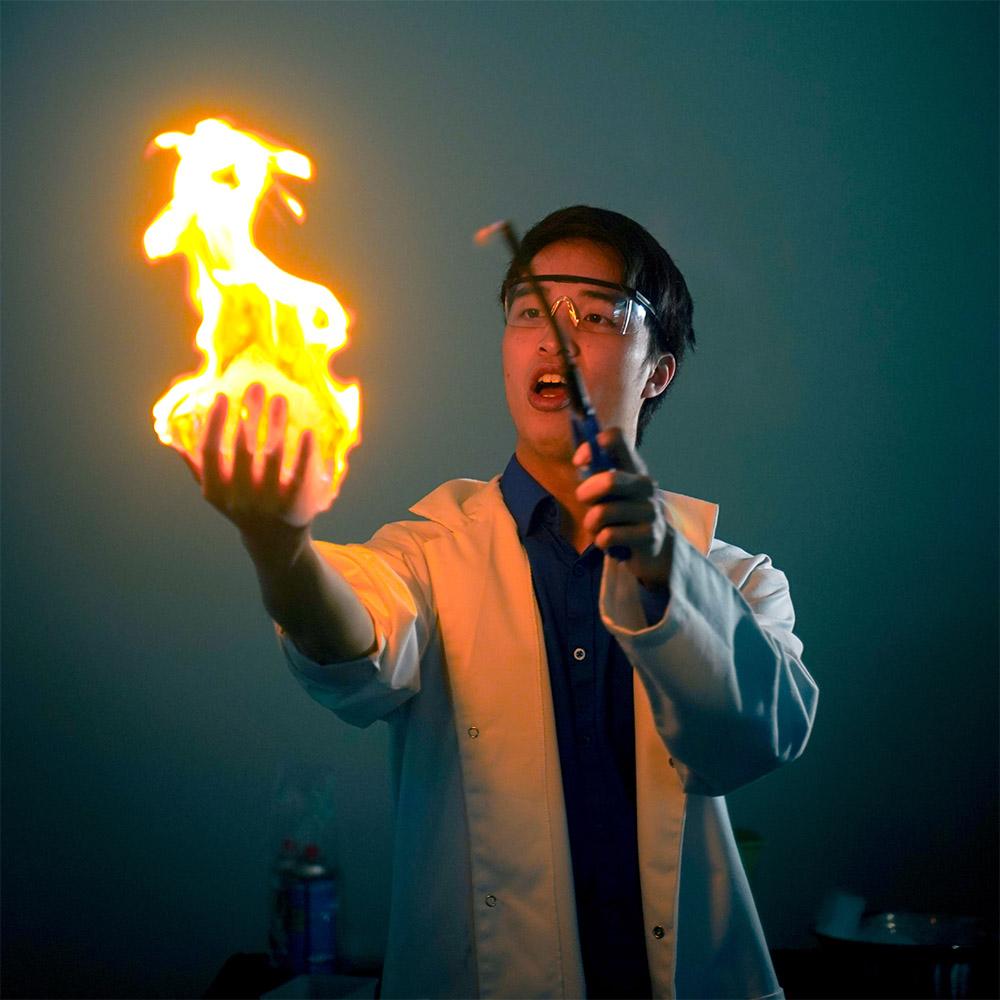
From the lightest element to the coolest element – watch our scientists fit amazing, bubbling, explosive and hair raising demonstrations in 1 fun-filled hour!!
Demonstrations Included
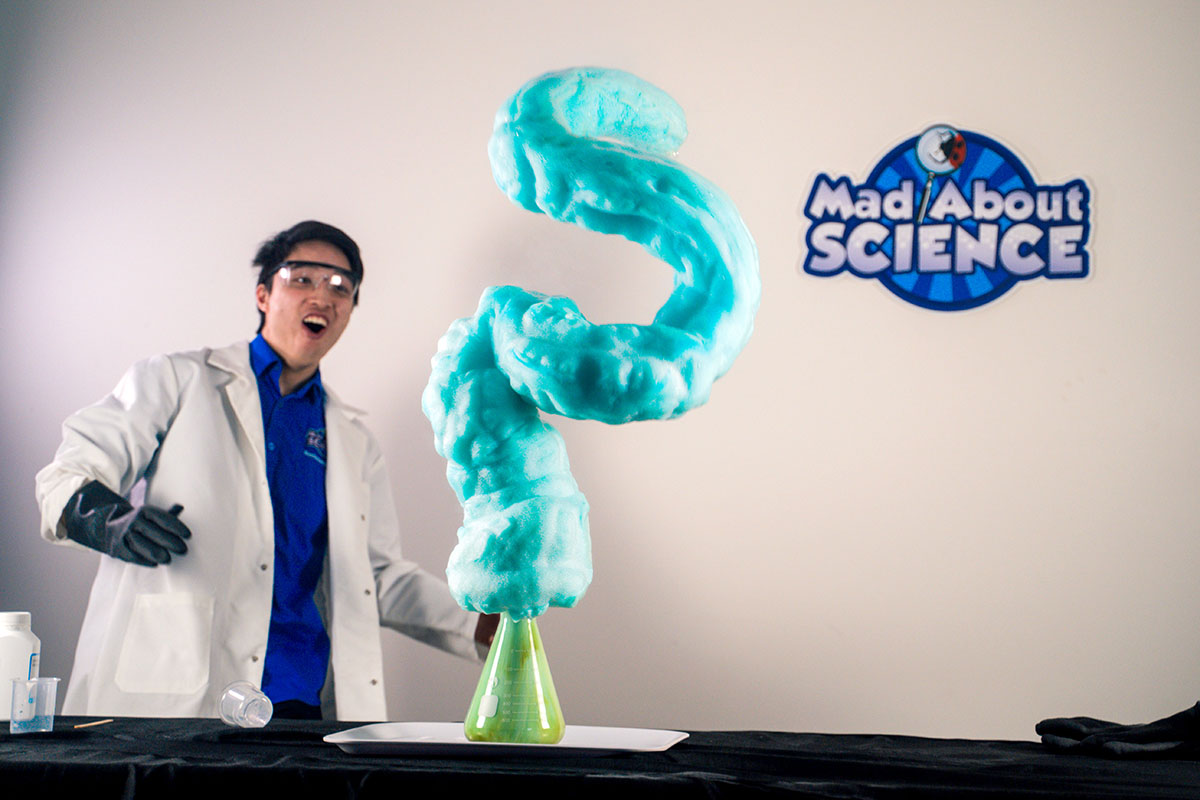
- Elephant’s toothpaste
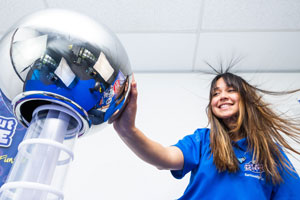
- Hair raising Van de Graaff volunteer moments
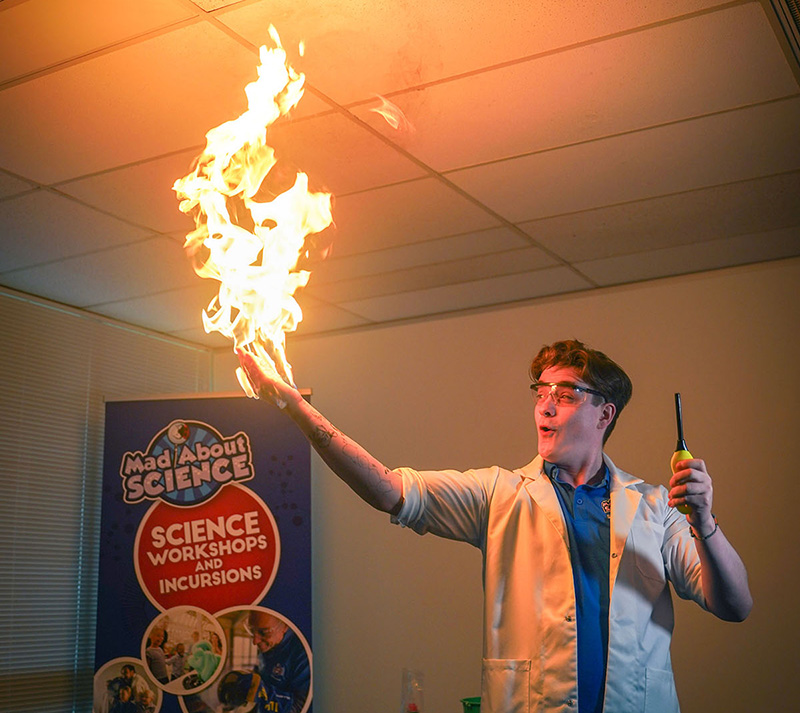
- Setting fire to a hydrogen balloon
- Lighting up flammable butane bubbles
- Whoosh bottle
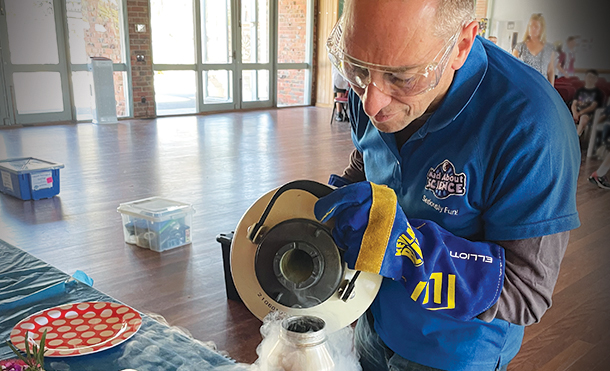
- Liquid nitrogen explosions
- Freezing and smashing super cooled objects
Learning Outcomes
- Students will learn that some elements are extremely reactive and therefore dangerous.
- Students will be able to identify solids, liquids, and gases.
- Students will be able to recall the three components of the fire triangle; oxygen, fuel and energy.
- Students will be able to identify an exothermic reaction as a reaction that releases energy.
- Students will be able to distinguish between static and current electricity.
- Students should understand that atoms have electrons.
- Students should understand that atoms can bond with other atoms to create molecules.
- Students will be able to explain what happens when you cool down a state of matter, and when you heat it up.
Victorian Curriculum Links – Year 7 to Year 10
- The properties of the different states of matter can be explained in terms of the motion and arrangement of particles (VCSSU096)
- Differences between elements, compounds and mixtures can be described by using a particle model (VCSSU097)
- Chemical change involves substances reacting to form new substances (VCSSU098)
- Energy appears in different forms including movement (kinetic energy), heat, light, chemical energy and potential energy; devices can change energy from one form to another (VCSSU104)
- The particle and kinetic theories of matter can be used to describe the arrangement and motion of particles in a substance, including the attraction between particles, and to explain the properties and behaviour of substances, including melting point, boiling point, density, compressibility, gas pressure, viscosity, diffusion, sublimation, and expansion and contraction VC2S8U05
- The atomic theory of matter can be used to model and explain the difference between elements, compounds and mixtures; elements, compounds and mixtures can be represented as two-dimensional and three-dimensional models, elements can be represented by symbols, and molecules and compounds can be represented by chemical formulas VC2S8U07
- Physical changes can be distinguished from chemical changes; a chemical change can be identified by a colour change, a temperature change, the production of a gas (including laboratory preparation and testing of oxygen, carbon dioxide and hydrogen gases) or the formation of a precipitate VC2S8U08
- The organisation of the elements in the periodic table is related to the structure and properties of atoms; patterns and trends include the significance of rows and periods, metallic and non-metallic properties, atomic size and reactivity VC2S10U07
- chemical reactions are described by the Law of Conservation of Mass and involve the rearrangement of atoms; they can be modelled using a range of representations, including word and simple balanced chemical equations VC2S10U08
- Chemical reactions include synthesis, decomposition and displacement reactions and can be classified as exothermic or endothermic; reaction rates are affected by factors including temperature, concentration, surface area of solid reactants, and catalysts VC2S10U09
Australian Curriculum Links
- A change of state between solid and liquid can be caused by adding or removing heat (ACSSU046)
- Solids, liquids and gases have different observable properties and behave in different ways (ACSSU077)
- Changes to materials can be reversible or irreversible (ACSSU095)
- Science involves observing, asking questions about, and describing changes in, objects and events (ACSHE034)
- Pose and respond to questions, and make predictions about familiar objects and events (ACSIS037)
- Compare observations with those of others (ACSIS041)