














Forces in Action
-
Level: Foundation/Kinder to Year 6
-
Duration: 60 or 90 minutes (90 minutes recommended)
-
Numbers: Maximum of 30 students per workshop
-
State: VIC & NSW
- Price
60 min: $450 per workshop
90 min: $560 per workshop
*Travel surcharge also applies based on location.
*Prices exclude GST.
*There is a minimum booking of 3 x 60 minute workshops or 2 x 90 minute workshops on the same day – or their cost equivalent.
"*" indicates required fields
From an apple falling to the ground to a car rolling to a halt, forces are constantly at work. A stimulating, hands-on look at things that move, and why! Available in a junior and middle/senior primary format.
Activities | Foundation/Kinder to Year 2
- Forces are discussed in the familiar context of land, air and sea vehicles.
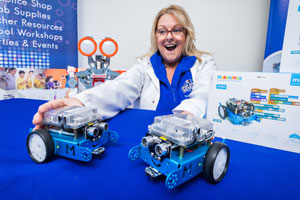
- Students examine the effects of friction on the movement of toy vehicles, and consider factors that must be controlled in order to perform a fair test.
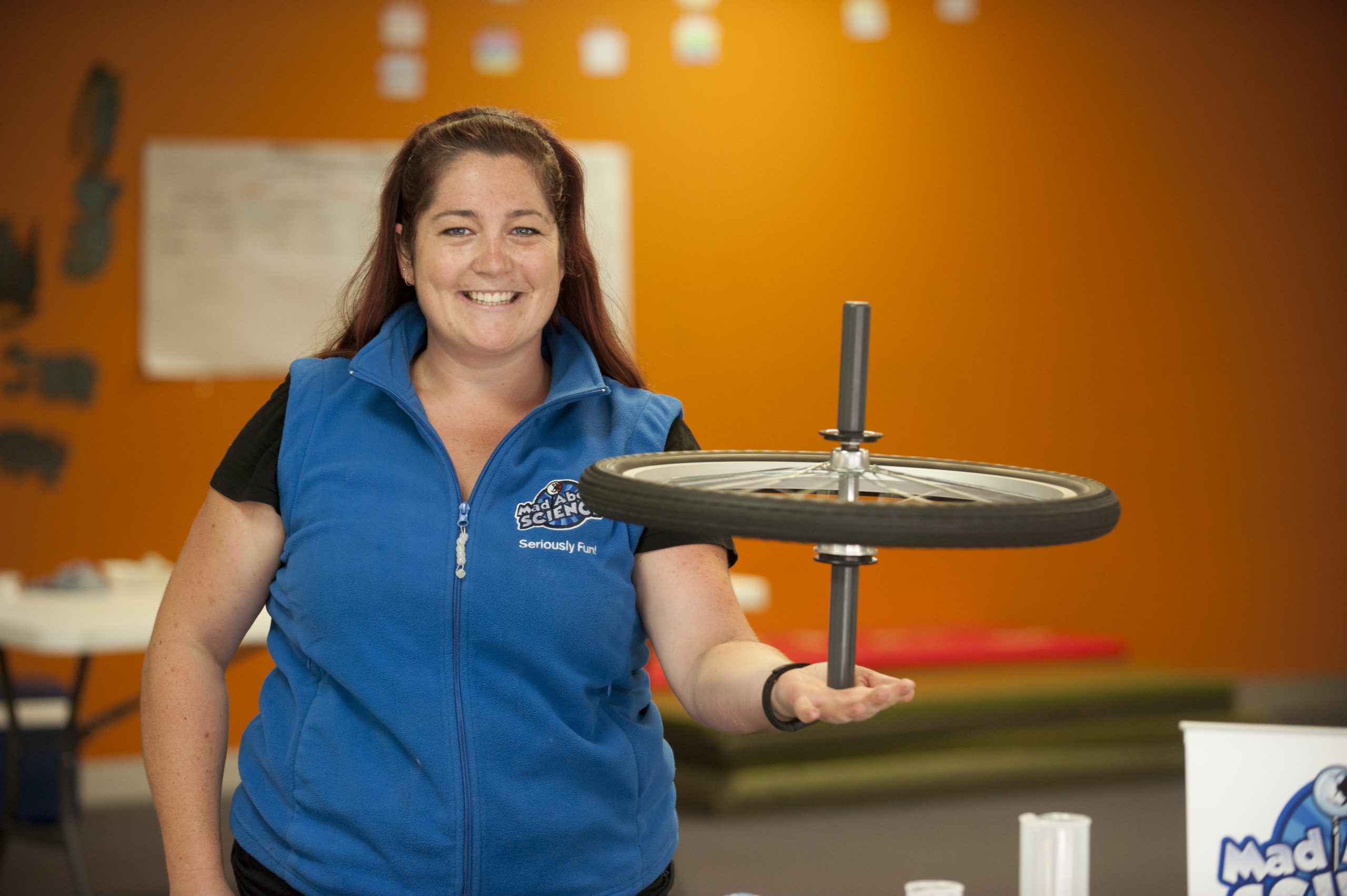
- Students explore the movement of gyroscopes, and use a variety of gyroscopes including precision, light up and rings.
- Students predict the result of a simple experiment on air resistance, then test that prediction.
- Fun demonstration of how fast-moving air creates a force and propels an object forward.
90 minute workshops also include these activities:
- Explore magnet force with magnets of varying strengths.
- Students predict, then test in groups whether an object will float or sink. Observe the difference in floating and sinking in fresh and salt water.
Activities | Year 3 to Year 6
-
Students cooperate with a partner to complete a challenging balance activity.
- Demonstration of the classic cartesian diver, and the forces involved in floating and sinking.
- Impressive demonstration of inertia.
- Students explore the concept of inertia with some classic simple experiments.
- In small groups, students measure and record the force required to move a heavy object and investigate how to increase or decrease that force.
- Students explore gyroscopic movement using a variety of different gyroscopes.
- Fun demonstration of Newton’s Third Law of Motion using the power of air.
- Students explore the effect of surface area on forces with a treacherous seat of nails.
90 minute workshops also include these activities:
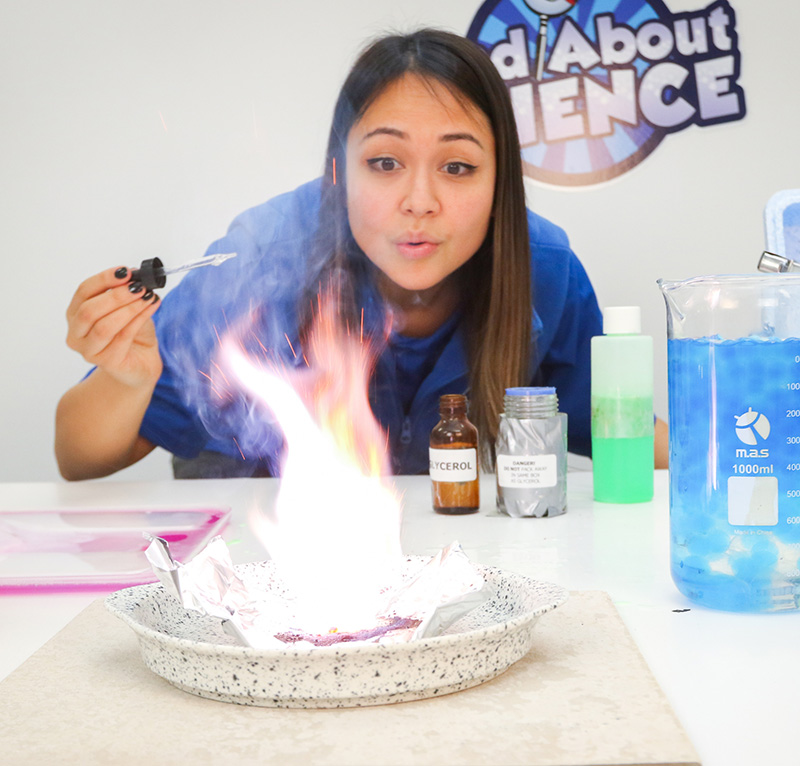
- Students create a chemical reaction that demonstrates Newton’s Third Law of Motion.
- Predict the result of a simple experiment on air resistance, then test that prediction.
Forces in Action – Junior Version
Learning Outcomes | Foundation/Kinder to Year 2
- Friction is a force that occurs when two things move past each other. It slows things down. Bumpy surfaces produce more friction.
- Friction can be reduced by using a wheel to roll over a surface rather slide.
- A gyroscope is like a spinning top. When it spins fast it resists falling over.
- For every force that acts, there is an equal force acting in the opposite direction. This is Newton’s Third Law of Motion.
- Air resistance is a friction force – it slows down the movement of objects in the air. Air resistance is affected by the shape of the object.
- An object floats when the force of gravity pulling the object down is balanced by the force of the water pushing up on the object.
- The magnetic force attracts different kinds of metals.
Forces in Action – Senior Version
Learning Outcomes | Year 3 to Year 6
- A force is a push or a pull. Gravity is the force that pulls all objects towards Earth.
- Everything on Earth has forces acting on it. If an object is not moving, it means that the forces acting on it are balanced.
- An unbalanced force is needed to move an object from rest or change its motion (speed and/or direction). This is Newton’s First Law of Motion.
- Inertia is an object’s tendency to resist changes to its motion.
- Friction is a force that resists movement. It occurs when two objects are moving past each other. Rougher surfaces produce a greater friction force.
- When it is spinning fast, a gyroscope will resist changes to its motion. This is called rotational inertia.
- For every force that acts, there is an equal force acting in the opposite direction. This is Newton’s Third Law of Motion.
- Heavy moving objects are harder to stop than lighter ones. This is Newton’s Second Law of Motion.
- Air resistance is a friction force – it slows down the movement of objects in the air. Air resistance is affected by the shape of the object.
- Newtons is a unit used to measure forces.
Victorian Curriculum Links | Foundation to Year 2
- Scientific knowledge is based on observations of the natural world using the senses, and scientific tools and instruments VC2S2H01
- Science is used by people in their daily lives, including asking questions and using patterns from observations of the world around them to make scientific predictions VC2S2H02
- The way objects move depends on a variety of factors including their size, shape and material VC2S2U10
- Pushes and pulls are forces that can change an object’s movement or shape and can be represented in terms of strength and direction VC2S2U11
- Experiences can be used as a basis for posing questions to explore observed patterns and relationships, and to make predictions VC2S2I01
- Observations are made using the senses and recorded, including informal measurements, using digital tools as appropriate VC2S2I03
- Observations can be compared to predictions and the observations of others, which may lead to further questions being identified VC2S2I05
Victorian Curriculum Links | Year 3 to Year 6
- Scientific knowledge, skills and data can be used by people to explain how they will meet a need or solve a problem VC2S4H02
- Forces, including frictional, gravitational, electrostatic and magnetic, can be exerted by one object on another through direct contact or from a distance and affect the motion (speed and direction) of objects VC2S4U10
- Observations can be used as a basis for posing questions to identify patterns and relationships, and to predict the outcomes of investigations VC2S4I01
- Observations, including formal measurements, can be made and recorded by following procedures to use familiar scaled instruments and digital tools as appropriate VC2S4I03
- Data and information can be organised and represented to identify patterns and simple relationships by constructing tables, graphs and visual or physical models VC2S4I04
- Findings can be compared to those of others, including, as appropriate, whether a test was fair or not, to enable conclusions to be drawn, and may lead to the identification of further questions for investigation VC2S4I05
- Scientific knowledge, skills and data can be used by individuals and communities to identify problems, consider responses and make decisions VC2S6H02
- Investigable questions and reasoned predictions can be used in guiding investigations to identify patterns and test relationships VC2S6I01
- Equipment can be used to observe, generate, measure and record data with reasonable precision for repeated measurements, using digital tools as appropriate VC2S6I03
- Methods and findings can be compared with those of others to identify sources of error, to select evidence in support of reasoned explanations and conclusions, and to develop further questions for investigation VC2S6I05
NSW Curriculum Links | Kinder to Stage 1
- Observes the way objects move and relates changes in motion to push and pull forces (STe-5PW-ST)
- Observes, questions and collects data to communicate ideas (STe-1WS-S)
- Investigate how forces and energy are used in products (ST1-9PW-ST)
NSW Curriculum Links | Stage 2 to Stage 3
- Describes how contact and non-contact forces affect an object’s motion (ST2-9PW-ST)
- Plans and conducts scientific investigations to answer testable questions, and collects and summarises data to communicate conclusions (ST3-1WS-S)
- Describes how digital systems represent and transmit data (ST2-11DI-T)
- Investigate the effects of increasing or decreasing the strength of a specific contact or non contact force (ST3-9PW-ST)
Australian Curriculum Links | Foundation/Kinder to Year 2
- The way objects move depends on a variey of factors, including their size and shape (ACSSU005)
- Respond to and pose questions, and make predictions about familiar objects and events (ACSIS024)
- Participate in guided investigations, including making observations using the senses, to explore and answer questions (ACSIS011)
Australian Curriculum Links | Year 3 to Year 6
- Forces can be exerted by one object on another through direct contact or from a distance (ACSSU076)
- With guidance, plan and conduct scientific investigations to find answers to questions, considering the safe use of appropriate materials and equipment (ACSIS054)
- Consider the elements of fair tests and use formal measurements and digital technologies as appropriate, to make and record observations accurately (ACSIS055)
- Compare observations and predictions with those of others (ACSIS041)