





Living Things
- Level: Foundation/Kinder to Year 6
- Duration: 60 or 90 minutes (90 minutes recommended)
- Numbers: Maximum of 30 students per workshop
- State: VIC & NSW
- Price
60 min: $450 per workshop
90 min: $560 per workshop
*Travel surcharge also applies based on location.
*Prices exclude GST.
*There is a minimum booking of 3 x 60 minute workshops or 2 x 90 minute workshops on the same day – or their cost equivalent.
"*" indicates required fields
This workshop is full of life! Explore objects that have self-sustaining processes like plants, animals and micro-organisms. Through engaging hands-on activities learn about the difference between living and non-living things, simple life cycles and the bigger picture. Available in a junior or middle/senior primary format.
Activities | Foundation/Kinder to Year 2
- Living vs Non-living – What makes something ‘alive’?
- ‘Creature Features’ Taxonomy – How do we use different species’ features to group them together?
- ‘Creature Features’ Adaptations – How do these same features help each species to thrive in their natural habitat?
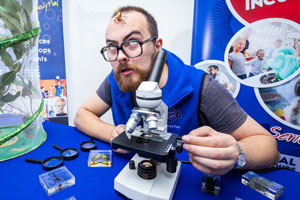
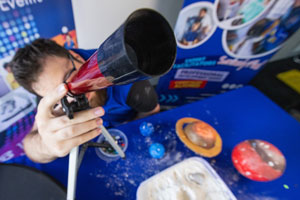
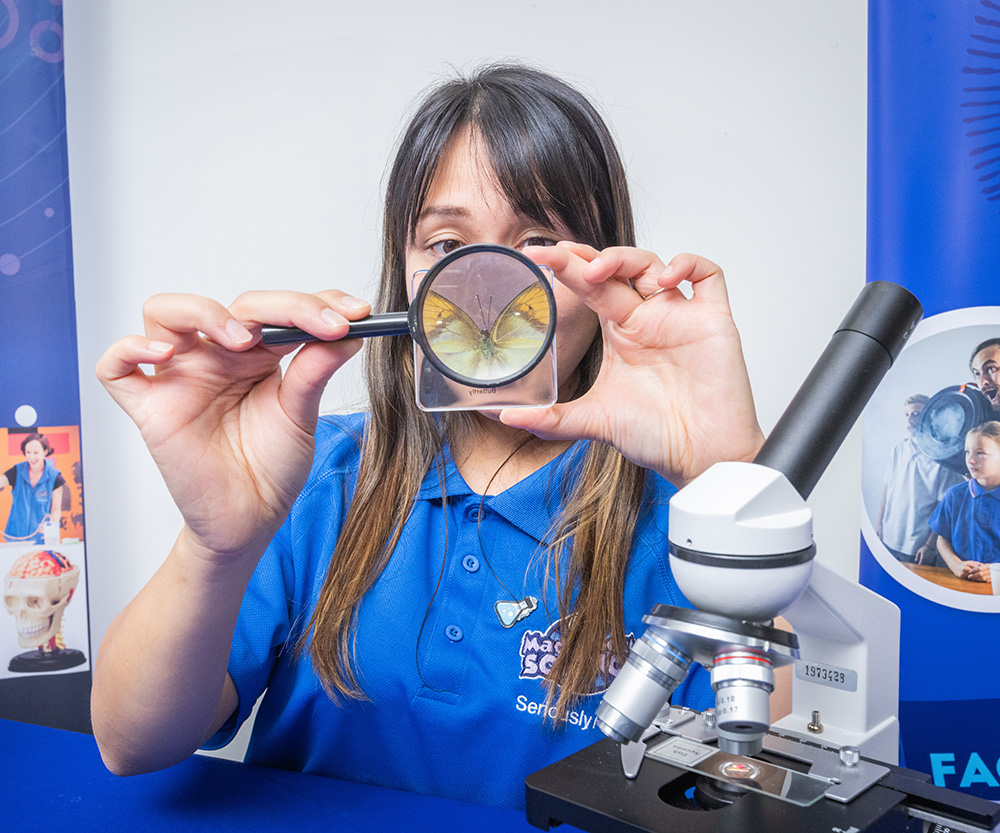
- Microscopes – break through biology into the most minute building blocks of life!
- Animal Sight & Hearing – Experience what it’s like to see or hear the way different animals can.
- Habitats and life cycles.
- Grow seeds yourself in a mini greenhouse!
- Make a class worm farm!
90 minute workshops also include these activities:
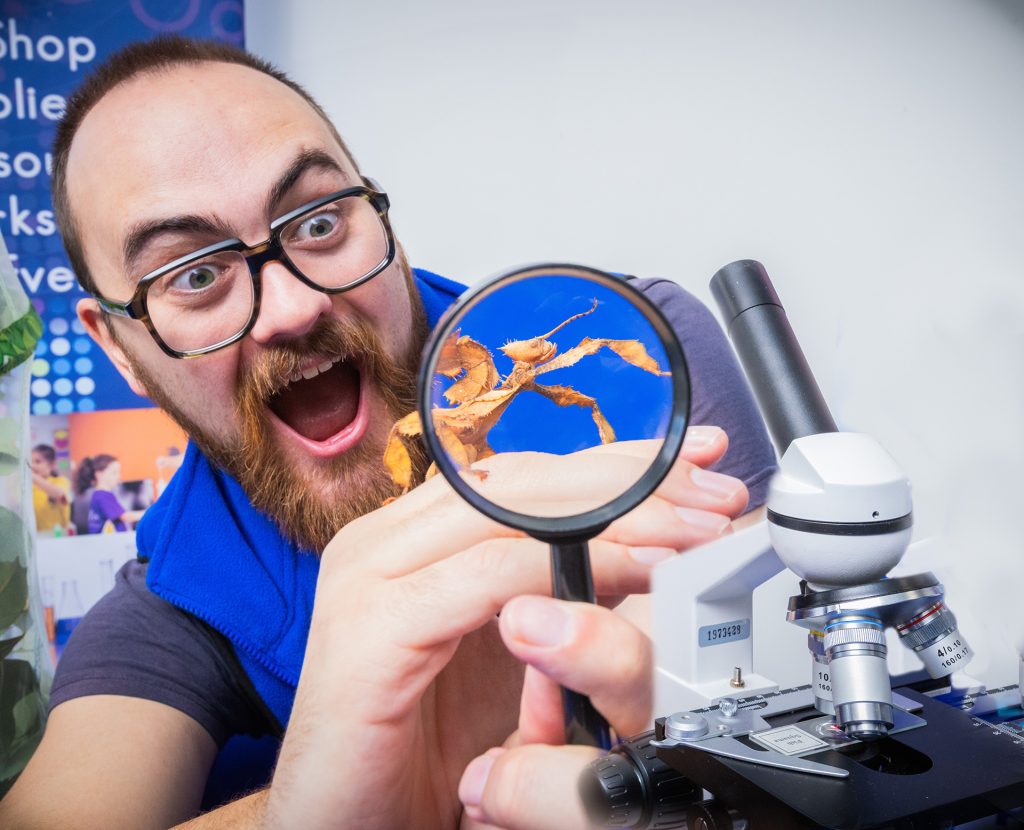
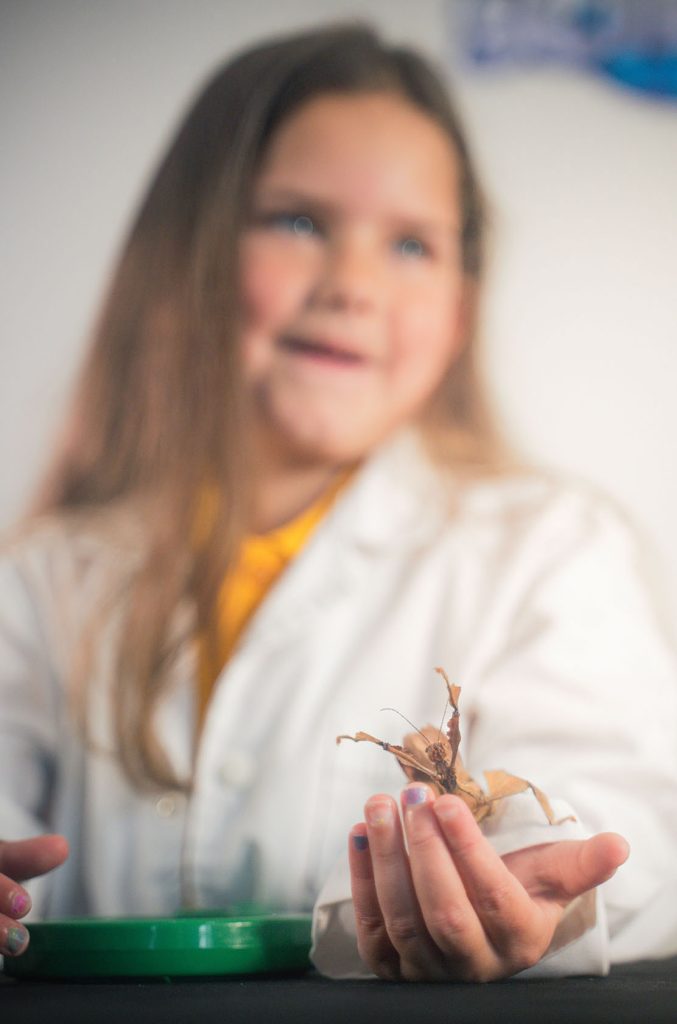
- Students study live worms or stick insects and their structure, identifying different parts of the anatomy.
Activities | Year 3 to Year 6
- Living vs Non-living – What makes something alive?
- Adaptations – Explore the way each species is perfectly fitted into its natural environment. Students observe live earthworms or stick insects, and examine their features & adaptations!
- Ecosystems – Take part in the food web and see the complex relationships at all levels of the ecosystem, each catering and complimenting the needs of the other.
- Microscopes – break through biology into the most minute building blocks of life!
- Animal Sight & Hearing – Experience what it’s like to see or hear the way different animals can.
- Taxonomy – Explore the many ways that species can be sorted together.
- Grow seeds yourself in a mini greenhouse!
- Get up close and personal with DNA. Touch real DNA in this awesome and memorable experiment!
90 minute workshops also include these activities:
- Homeostasis – how does something stay alive? Keep something alive yourself!
- Ecology Game – students play in groups of Producers & Consumers, growing & dying in an ecosystem!
Learning Outcomes | Foundation/Kinder to Year 2
- How to decide whether something is Living or Non-living (living things move, grow, respire, reproduce, excrete waste, respond to stimuli and require food).
- All living things (organisms) are made up of cells.
- Because there are so many different types (species) of living things, scientists sort them
into groups. This is called classification. - Scientists place living things into groups according to features that they have in common. (Organisms in the same group all have that feature). Big groups can be split into smaller groups, again based on common features (or common differences) between the organisms.
- Yeast is a living thing – it belongs to the Kingdom Fungi. The carbon dioxide produced by the respiration of yeast is used in baking.
- Earthworms are invertebrates that are very helpful. Given the right conditions, they can break down food scraps into compost.
- Microscopes use light and lenses to produce magnified images.
Victorian Curriculum Links | Foundation to Year 2
- Scientific knowledge is based on observations of the natural world using the senses, and scientific tools and instruments VC2S2H01
- Plants and animals have observable features that can be used to group them in different ways VC2S2U01
- Plants and animals have basic needs, including air, water, food and shelter; the places where they live meet those needs VC2S2U02
- Plants and animals have external features that perform different functions to enable their survival; in plants these features include roots, stems, leaves, flowers, fruit, bulbs, trunks and branches while different features in animals enable them to move, breathe, eat and respond to their environment VC2S2U03
Victorian Curriculum Links | Year 3 to Year 6
- Living things have characteristics that distinguish them from non-living things and things that were once living, including fossils VC2S4U01
- Plants and animals have different life cycles; offspring are similar, but not identical, to their parents VC2S4U02
- Consumers, producers and decomposers have different roles and interactions within a habitat; food chains can be used to represent feeding relationships VC2S4U03
- Organisms have evolved over time, as seen in fossils and scientific records; the structural features and behaviours of living organisms enable them to thrive in their environments VC2S6U02
NSW Curriculum Links | Kinder to Stage 1
- Compares features and characteristics of living and non-living things (ST2-4LW-S)
- Examines how the environment affects the growth, survival and adaptation of living things (ST3-4LW-S)
- ‘Questions, plans and conducts scientific investigations, collects and summarises data and communicates using scientific representations (ST2-1WS-S)
- Plans and uses materials, tools and equipment to develop solutions for a need or opportunity (ST3-2DP-T)
NSW Curriculum Links | Stage 2 to Stage 3
- Uses information to investigate the solar system and the effects of energy on living, physical and geological systems (ST2-SCI-01)
- Poses questions to create fair tests that investigate the effects of energy on living things and physical systems (ST2-PQU-01)
- Uses and interprets data to describe patterns and relationships (ST2-DAT-01)
- Interprets data to support explanations and arguments (ST3-DAT-01)
Australian Curriculum Links | Foundation/Kinder to Year 2
- Living things grow, change and have offspring similar to themselves (ACSSU030)
- Living things can be grouped on the basis of observable features and can be distinguished from non-living things (ACSSU044)
- Living things have structural features and adaptations that help them to survive in their environment (ACSSU043)
- Participate in guided investigations, including making observations using the senses, to explore and answer questions (ACSIS025)
- With guidance, plan and conduct scientific investigations to find answers to questions, considering the safe use of appropriate materials and equipment (ACSIS065)
Australian Curriculum Links | Year 3 to Year 6
- Compare characteristics of living and non-living things and examine the differences between the life cycles of plants and animals (AC9S3U01 )
- Consider how people use scientific explanations to meet a need or solve a problem (AC9S3H02)
- Use provided scaffolds to plan and conduct investigations to answer questions or test predictions, including identifying the elements of fair tests, and considering the safe use of materials and equipment (AC9S3I02)
- Explain the roles and interactions of consumers, producers and decomposers within a habitat and how food chains represent feeding relationships (AC9S4U01)
- Examine how particular structural features and behaviours of living things enable their survival in specific habitats (AC9S5U01)
Learning Outcomes | Year 3 to Year 6
- Students understand the definition of an organism and the traits that all living things share.
- Students should understand that an organism is a constant system of inputs and outputs, and that to stay alive it needs everything to remain moderated within certain parameters. This process is called ‘homeostasis’.
- Students should encounter real invertebrates in the classroom, understanding their physical structure and how these adaptations help the animals survive.
- Students understand that organisms exist in a complex web of interrelationships in the ecosystem. They are grouped together into different levels of the ecosystem called ‘trophic levels’. Each trophic level contains species that feed on the species from the level below.
- Students understand the way trophic levels must remain in balance in an ecosystem, determined by how large each level is, how fast each grows, and how much each takes from the other.
- Students experience some of the different ways that other species see and consider how these adaptations benefit their survival.
- Students experience some of the different ways that other species hear and consider how these adaptations benefit their survival.
- Students learn to use a microscope and see real life cells on a microscopic level.
- Students learn that taxonomy is the sorting of related species into groups, and how it works.
- Students learn about life cycles and experimental structure (including dependent and independent variables) by way of grass seed growing experiments.
- Students understand that DNA is like the instruction manual for how to build an organism, that it is found inside the cells of an organism, and that it can be chemically extracted from a cell.