







Material Science
- Level: Foundation/Kinder to Year 3
- Duration: 60 or 90 minutes (90 minutes recommended)
- Numbers: Maximum of 30 students per workshop
- State: VIC & NSW
- Price
60 min: $450 per workshop
90 min: $560 per workshop
*Travel surcharge also applies based on location.
*Prices exclude GST.
*There is a minimum booking of 3 x 60 minute workshops or 2 x 90 minute workshops on the same day – or their cost equivalent.
"*" indicates required fields
Students investigate the properties of materials by sorting, testing, and mixing them. They uncover physical and chemical changes, engineer material mixtures for specific purposes, and see materials transform before their eyes.
Activities
- Small group classification of a range of materials properties, and how they are useful in our lives.
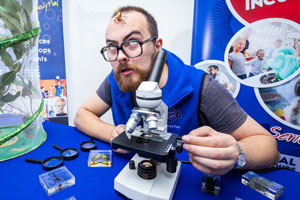
- Engaging teacher demonstration using a digital microscope to view images of materials on a big screen, gaining insight into their incredible structures.
- Students transform a material physically from its natural, raw form into an everyday object.
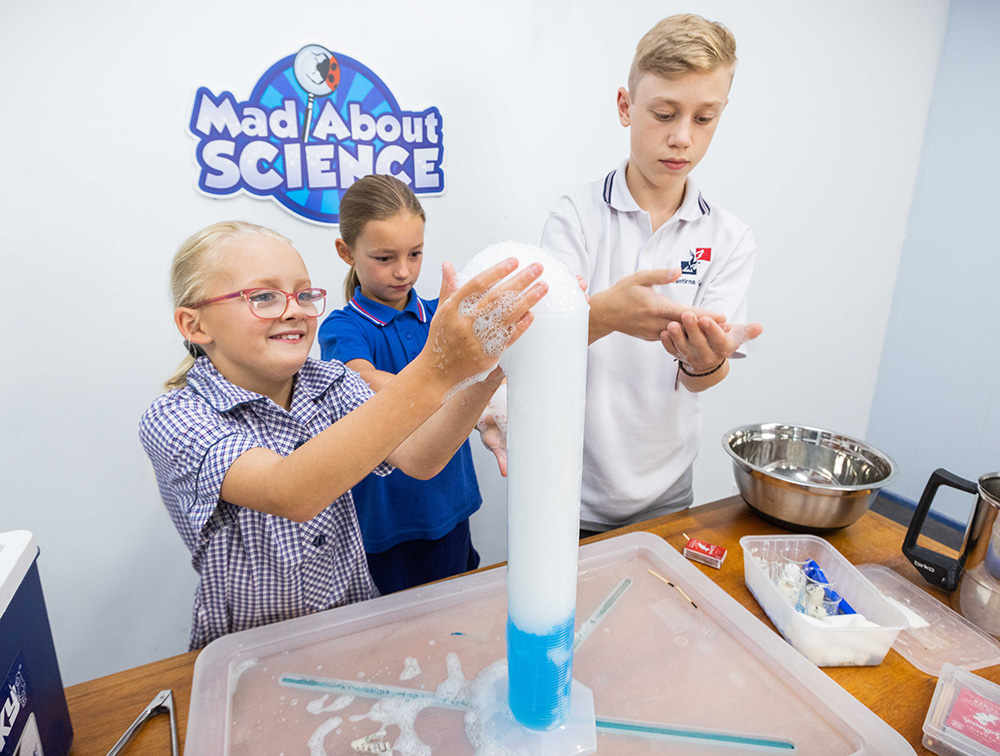
- Students investigate and deduct new material properties by combining materials together.
- Demonstration of the amazing properties of Nitinol memory wire.
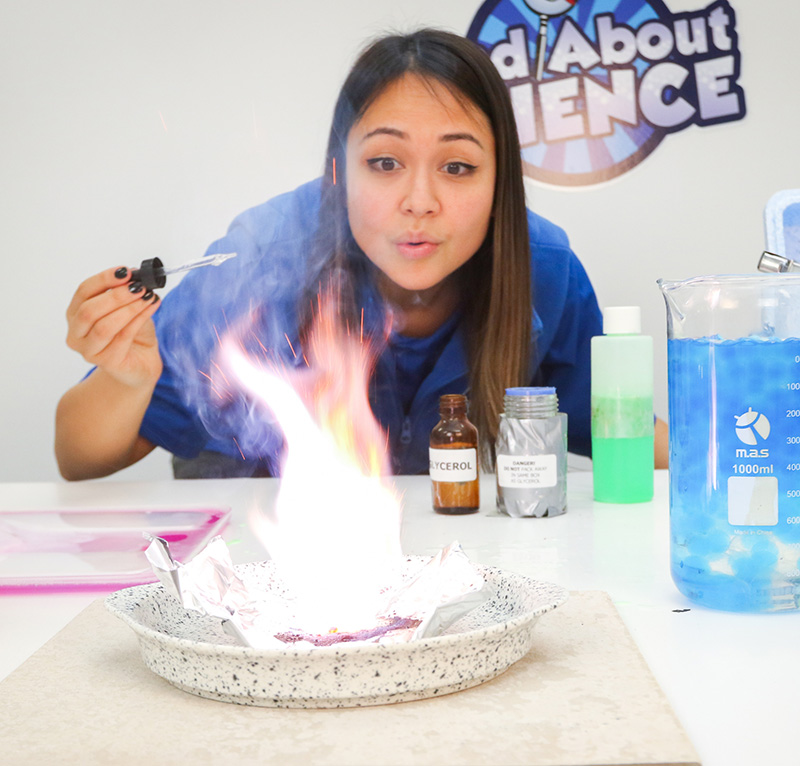
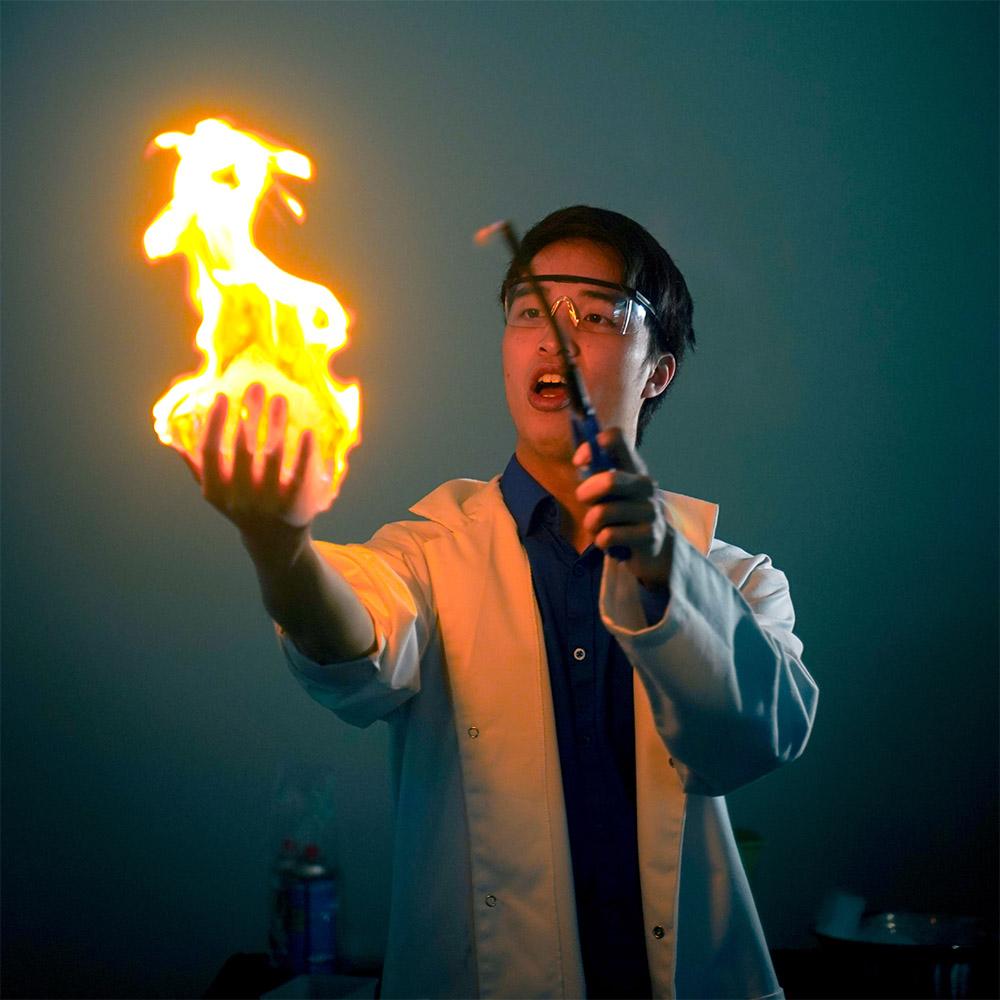
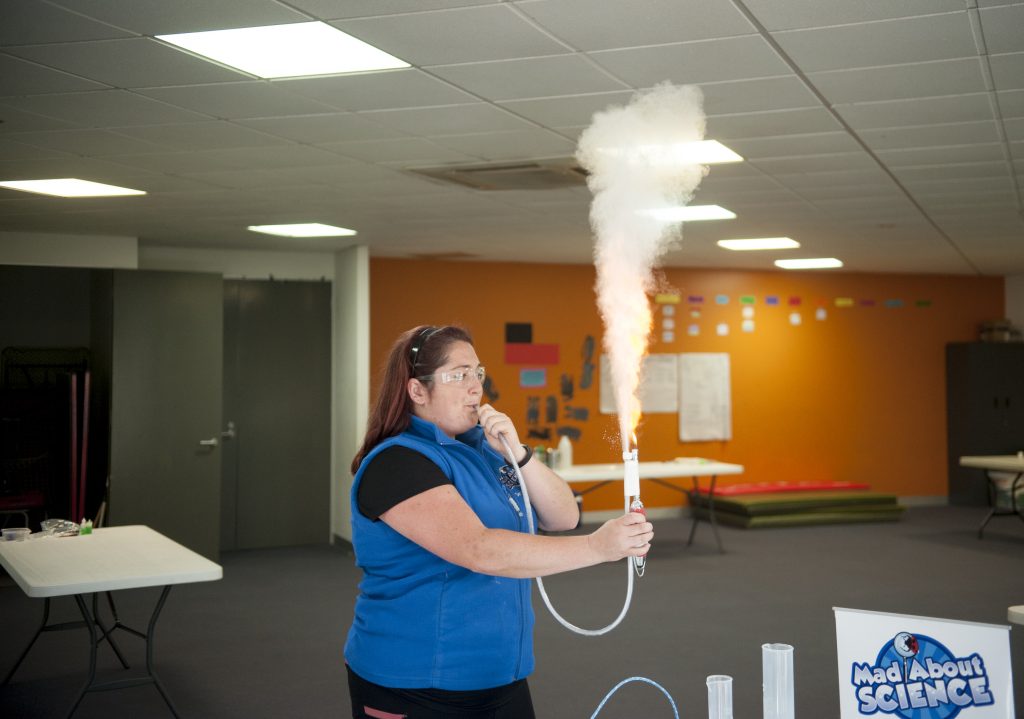
- Explosive demonstration of a material’s hidden property.
- [Years 2-3] Exploration of how materials can be reused and repurposed to give a new life.
90 minute workshops also include the following activities:
- Students use a specifically designed material for health and entertainment industries to make copies of everyday objects.
- Students experiment making waste material disappear to protect our environment.
Learning Outcomes
- Understand that ‘materials’ are the different substances that objects are made from.
- Recognise that many natural and man-made materials are processed to produce useful materials.
- Everyday objects are made up of materials with specific properties to suit the object’s use.
- Materials can be changed physically by changing their structure without adding other material.
- Different materials can be combined to produce new properties which can then be used in new ways.
- [Years 2-3] Materials can be reused and repurposed in different ways, depending upon their material composition.
Victorian Curriculum Links
- Objects can be made of one or more different materials; these materials have observable properties VC2S2U04
- Materials can be combined in a variety of ways for particular purposes; the properties of objects and mixtures can differ from the properties of the materials from which they are made VC2S2U05
- Materials can be changed physically by different actions without changing their material composition, including by bending, twisting, stretching, crushing, squashing and breaking into smaller pieces VC2S2U06
- The properties of natural and made materials, including fibres, metals, glass and plastics, influence their use and re-use VC2S4U05
NSW Curriculum Links
- Identifies that objects are made of materials that have observable properties (STe-4MW-ST)
- Identifies that materials can be changed or combined (ST1-6MW-S)
- Questions, plans and conducts scientific investigations, collects and summarises data and communicates using scientific representations (ST2-1WS-S)
- Plans and uses materials, tools and equipment to develop solutions for a need or opportunity (ST3-2DP-T)
Australian Curriculum Links
- Objects are made of materials that have observable properties (ACSSU003)
- Everyday materials can be physically changed or combined with other materials for particular purposes (ACSSU018)
- A change of state between solid and liquid can be caused by adding or removing heat (ACSSU046)
- Changes to materials can be reversible or irreversible (ACSSU095)
- Participate in guided investigations to explore and answer questions (ACSIS025)
- With guidance, plan and conduct scientific investigations considering the safe use of appropriate materials and equipment (ACSIS065)