












Natural Disasters
- Level: Year 3 to Year 6
- Duration: 60 or 90 minutes (90 minutes recommended)
- Numbers: Maximum of 30 students per workshop
- State: VIC & NSW
- Price
60 min: $450 per workshop
90 min: $560 per workshop
*Travel surcharge also applies based on location.
*Prices exclude GST.
*There is a minimum booking of 3 x 60 minute workshops or 2 x 90 minute workshops on the same day – or their cost equivalent.
"*" indicates required fields
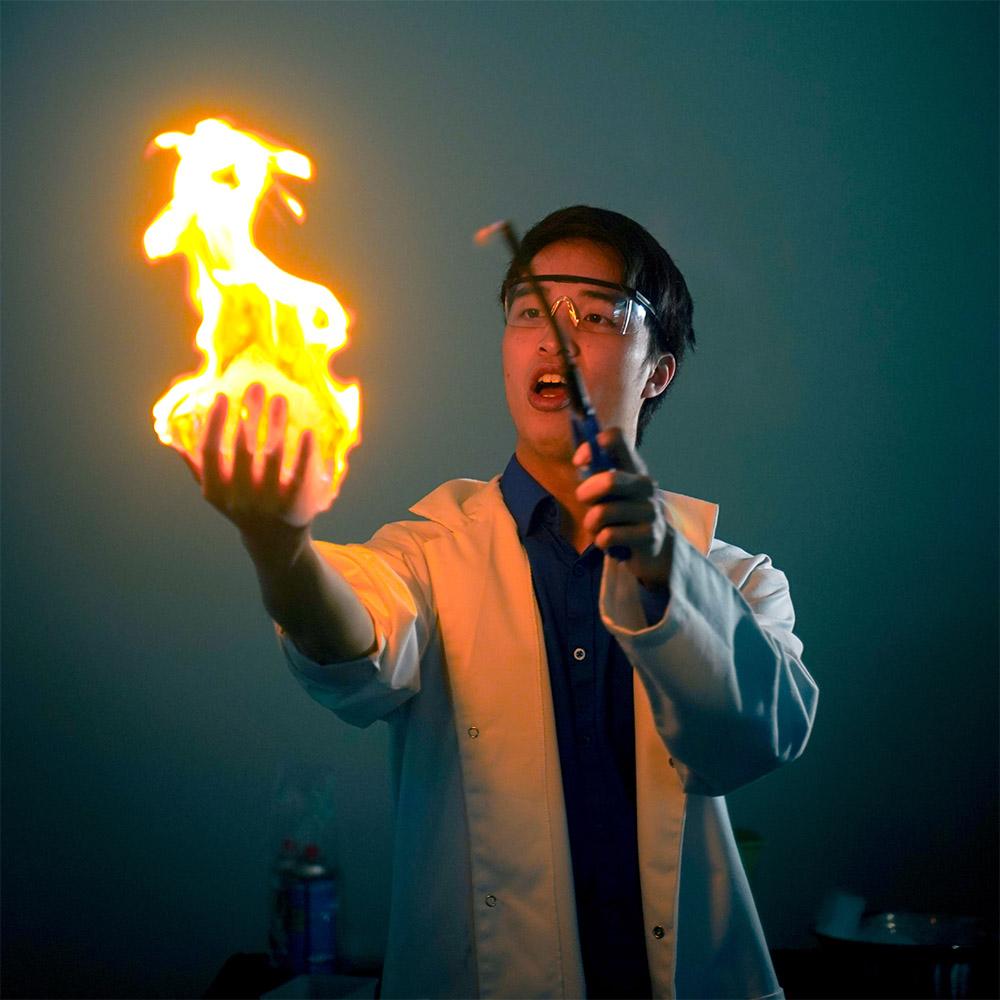
Explore the science behind nature’s most powerful forces. Investigate how tornadoes, earthquakes, blizzards, and volcanoes form, then apply your understanding by designing and testing an earthquake-proof building.

Activities
- Discussion of the types of natural disasters and their effects, with a focus on the natural disasters that affect us locally in Australia.
- Demonstration of the Earth spinning on its axis to cause day and night, and how this affects the atmosphere, climate, and weather, including extreme weather.
- Exciting demonstration of convection currents in air.
- Students create a blizzard and erupt a flurry of snow powder.
- Students create a tornado in a bottle.
- Slinky demonstration of earthquake seismic waves.
- Students build houses using spaghetti and play dough, then test their designs against an earthquake.
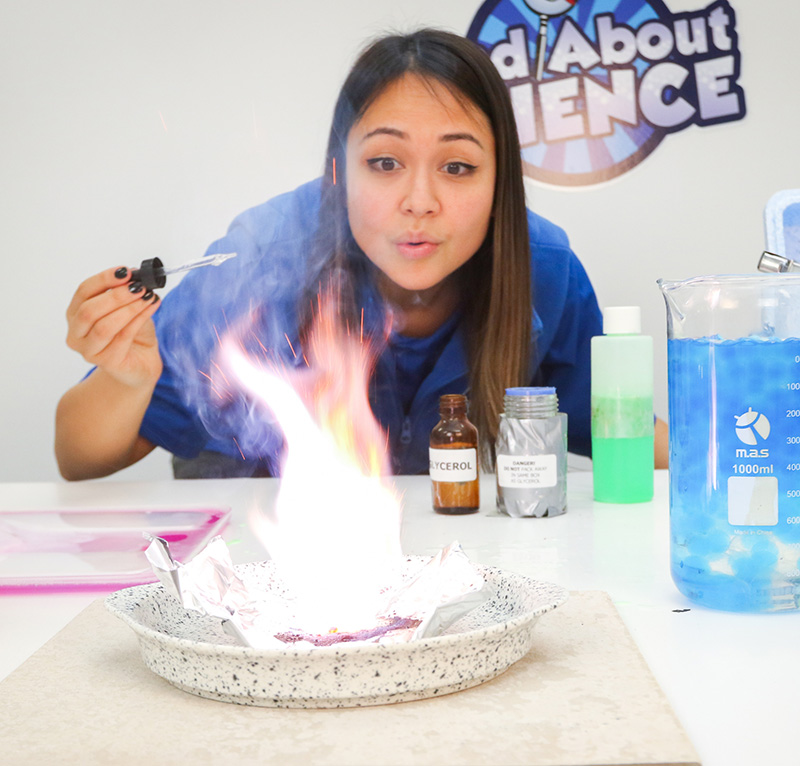
- Students create a chemical volcanic eruption.
90 minute workshops also include these activities (time permitting):
- Cloud in a bottle demonstration.
- Tsunami demonstration.
Learning Outcomes
- Understand what a natural disaster is and the effects natural disasters can have.
- Be aware of natural disasters that affect Australia locally, as well as those occurring around the world.
- Extreme weather is the cause of many natural disasters.
- The Earth’s rotation on its axis causes regular changes, including day and night, the seasons, climate and weather.
- Understand how convection currents can cause cyclones and tornadoes.
- Understand the formation of hail and snow in blizzards and storms.
- Understand what causes earthquakes and how they spread.
- Consider how building design is affected by earthquakes.
- Understand what causes a volcanic eruption.
- Explore how scientific understanding can assist in natural disaster management to minimise both short- and long-term effects, including early warning systems such as a 60-second warning.
Victorian Curriculum Links
- Data from observations obtained through scientific inquiry can be used to develop explanations of natural phenomena VC2S4H01
- Scientific knowledge, skills and data can be used by individuals and communities to identify problems, consider responses and make decisions VC2S6H02
- Habitats can be described by their physical conditions; changing the physical conditions of a habitat, including by human activity, may affect the growth and survival of organisms VC2S6U01
- The properties of natural and made materials, including fibres, metals, glass and plastics, influence their use and re-use VC2S4U05
- Weather events and climate have impacts on the land, air, water and living things; human activity can affect climate VC2S4U08
- Sudden geological changes or extreme weather conditions can affect Earth’s surface and atmosphere; the impacts of natural hazards, including earthquakes, volcanic eruptions, wildfires and floods, can be reduced by human actions and technological innovations VC2S6U06
NSW Curriculum Links
- Recognises observable changes occurring in the sky and on the land and identifies Earth’s resources (ST1-10ES-S)
- Investigates regular changes caused by interactions between the Earth and the Sun, and changes to the Earth’s surface (ST2-10ES-S)
- Explains regular events in the solar system and geological events on the Earth’s surface (ST3-10ES-S)
- Selects and uses materials, tools and equipment to develop solutions for a need or opportunity (ST2-2DP-T)
Australian Curriculum Links
- Scientific understandings, discoveries and inventions are used to inform personal and community decisions (ACSHE083)
- Earth’s rotation on its axis causes regular changes, including night and day (ACSSU048)
- Sudden geological changes or extreme weather conditions can affect Earth’s surface (ACSSU096)
- Earth’s surface changes over time as a result of natural processes and human activity (ACSSU075)
- Compare results with predictions, suggesting possible reasons for findings (ACSIS216)