










Plant Power
- Level: Year 2 to Year 6
- Duration: 60 or 90 minutes (90 minutes recommended)
- Numbers: Maximum of 30 students per workshop
- State: VIC & NSW
- Price
60 min: $450 per workshop
90 min: $560 per workshop
*Travel surcharge also applies based on location.
*Prices exclude GST.
*There is a minimum booking of 3 x 60 minute workshops or 2 x 90 minute workshops on the same day – or their cost equivalent.
"*" indicates required fields
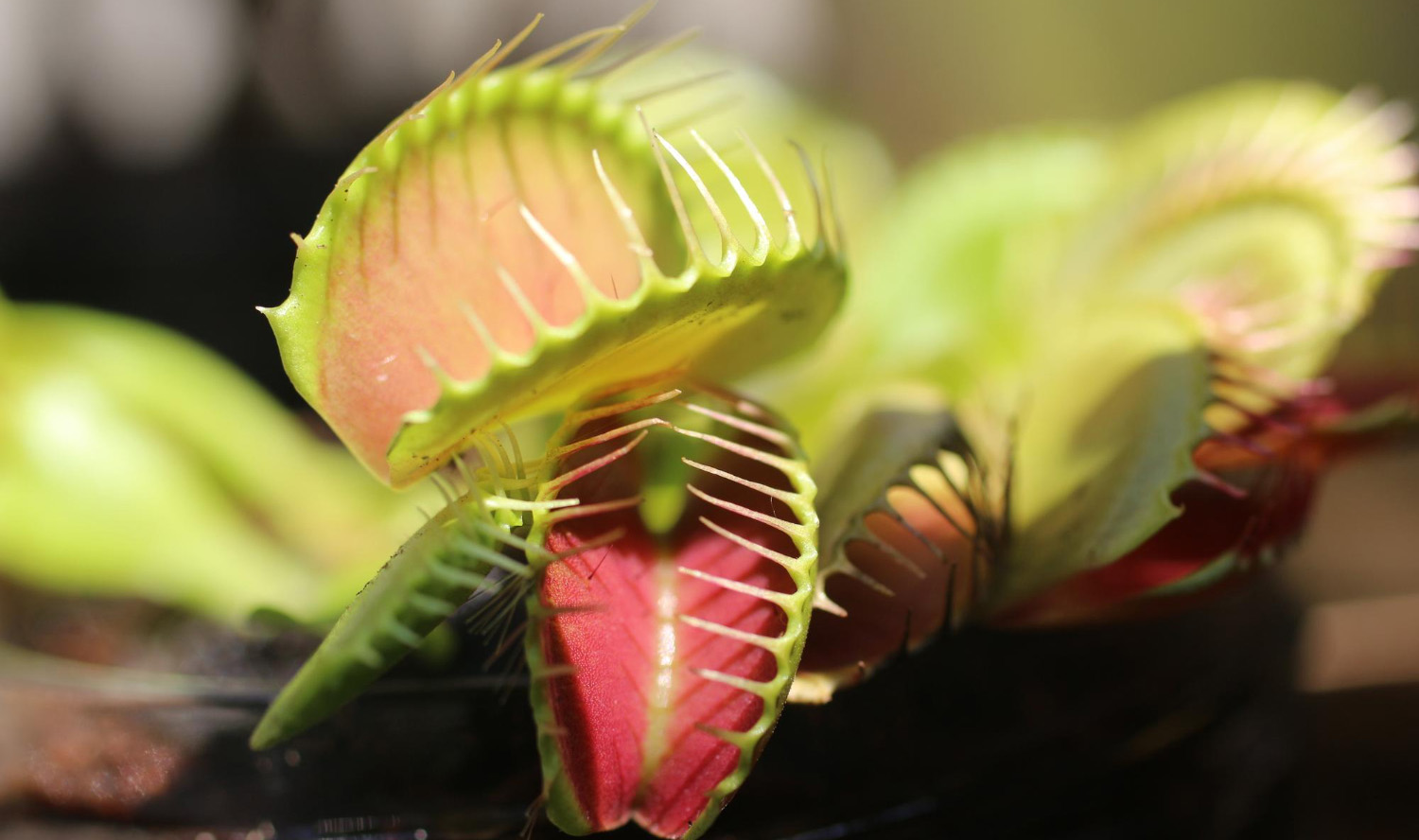
Discover how plants grow, thrive, and survive! Follow their life cycle from seed to plant, explore how they get energy, and learn why plants are essential to life on Earth!
Activities
-
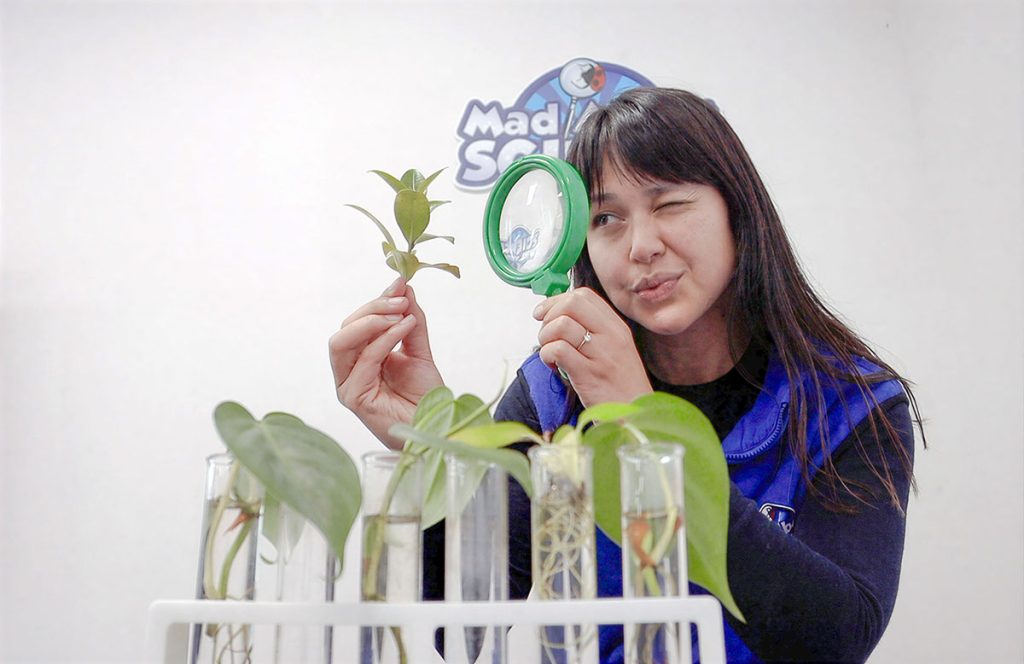
Students collect a mature plant specimen and observe and record its anatomy.
-
Students observe how water and other nutrients are transported from the roots of a plant through the xylem.
-
Students learn about soil pH and test the acidity of soil samples using litmus paper.
-
Students discover the different methods that plants use to spread their seeds, and make a model of a ‘helicopter’ seed.
-
Students experiment to determine the effect of moisture, temperature and light on plant growth by creating mini-greenhouses.
90 minute workshops also include these activities:
-
Students learn about chlorophyll and extract it from leaves.
Learning Outcomes
- Plants have several anatomical features.
- Photosynthesis is the process of converting sunlight into plant food.
- Soil pH is very important for plant health.
- Seeds germinate and sprout best under certain conditions.
- Plants have evolved to spread their seeds most effectively.
- Plants are able to extract nutrients from soil through xylem.
Victorian Curriculum Links
- Scientific knowledge is based on observations of the natural world using the senses, and scientific tools and instruments VC2S2H01
- Science is used by people in their daily lives, including asking questions and using patterns from observations of the world around them to make scientific predictions VC2S2H02
- Plants and animals have observable features that can be used to group them in different ways VC2S2U01
- Plants and animals have basic needs, including air, water, food and shelter; the places where they live meet those needs VC2S2U02
- Plants and animals have external features that perform different functions to enable their survival; in plants these features include roots, stems, leaves, flowers, fruit, bulbs, trunks and branches while different features in animals enable them to move, breathe, eat and respond to their environment VC2S2U03
- Plants and animals have different life cycles; offspring are similar, but not identical, to their parents VC2S4U02
- Scientific investigations to answer questions or test predictions can be planned and conducted using provided scaffolds, including identifying the attributes of fair tests, and considering the safe use of materials and equipment VC2S4I02
- Organisms have evolved over time, as seen in fossils and scientific records; the structural features and behaviours of living organisms enable them to thrive in their environments VC2S6U02
- Repeatable scientific investigations to answer questions can be planned and conducted, including, as appropriate, deciding the variables to be changed, measured and controlled in fair tests, considering potential risks, planning for the safe and ethical use of equipment and materials, and obtaining permissions for investigations conducted on Country and Place or in protected areas VC2S6I02
NSW Curriculum Links
- Explores the characteristics, needs and uses of living things (STe-3LW-ST)
- Identifies how plants and animals are used for food and fibre products (ST1-5LW-T)
- Compares features and characteristics of living and non-living things (ST2-4LW-S)
- Examines how the environment affects the growth, survival and adaptation of living things (ST3-4LW-S)
- Identifies and describes characteristics of living things, properties of materials, and movement (STE-SCI-01)
- Measures and describes changes in living things, materials, movement, Earth and the sky (ST1-SCI-01)
- Uses information to investigate the solar system and the effects of energy on living, physical and geological systems (ST2-SCI-01)
Australian Curriculum Links
- Living things have basic needs, including food and water (ACSSU002)
- Living things have a variety of external features (ACSSU017)
- Living things live in different places where their needs are met (ACSSU211)
- Living things grow, change and have offspring similar to themselves (ACSSU030)
- Living things have life cycles (ACSSU072)
- Living things depend on each other and the environment to survive (ACSSU073)
- Living things have structural features and adaptations that help them to survive in their environment (ACSSU043)
- The growth and survival of living things are affected by physical conditions of their environment (ACSSU094)
- Pose and respond to questions, and make predictions about familiar objects and events (ACSIS024)
- With guidance, plan and conduct scientific investigations to find answers to questions, considering the safe use of appropriate materials and equipment (ACSIS054)
- Represent and communicate observations and ideas in a variety of ways (ACSIS029)