












Simple Machines
- Level: Year 3 to Year 6
- Duration: 90 minutes
- Numbers: Maximum of 30 students per workshop
- State: VIC ONLY
- Price: $560 per 90 minute workshop
*Travel surcharge also applies based on location.
*Prices exclude GST.
*There is a minimum booking of 2 x 90 minute workshops on the same day – or their cost equivalent.
"*" indicates required fields
Launch projectiles with D.I.Y catapults, watch motorised gears turn to speed things up, and lift friends off the ground with a super-sized lever. An engaging look at how simple machines make our life easier, now, and in the past.
Activities
- Demonstration of various tools and compound machines that include simple machines.
-
Students work collaboratively in groups to investigate a real tool in further detail and discuss its features, how it works, and more.
-
Role play and demonstration of how a supersized lever can be used to lift a student (the load). How the pivot point or fulcrum is positioned to ease the load is explored.
-
Students create a machine that makes it easier to move a heavy load. They measure and record the force required to move the load after various changes to the design.
-
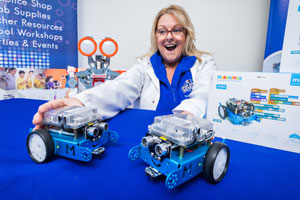
Students use motorised cog wheels, and gears on blocks to explore how gears work.
-
Impressive demonstration and discussion of a super-sized catapult.
-
Each student makes a catapult to keep.
-
Each student compares and explores two pulley systems.
Learning Outcomes
- We invent machines to make our life easier.
- Simple machines let us change the size and direction of forces, and are the basis of all machines.
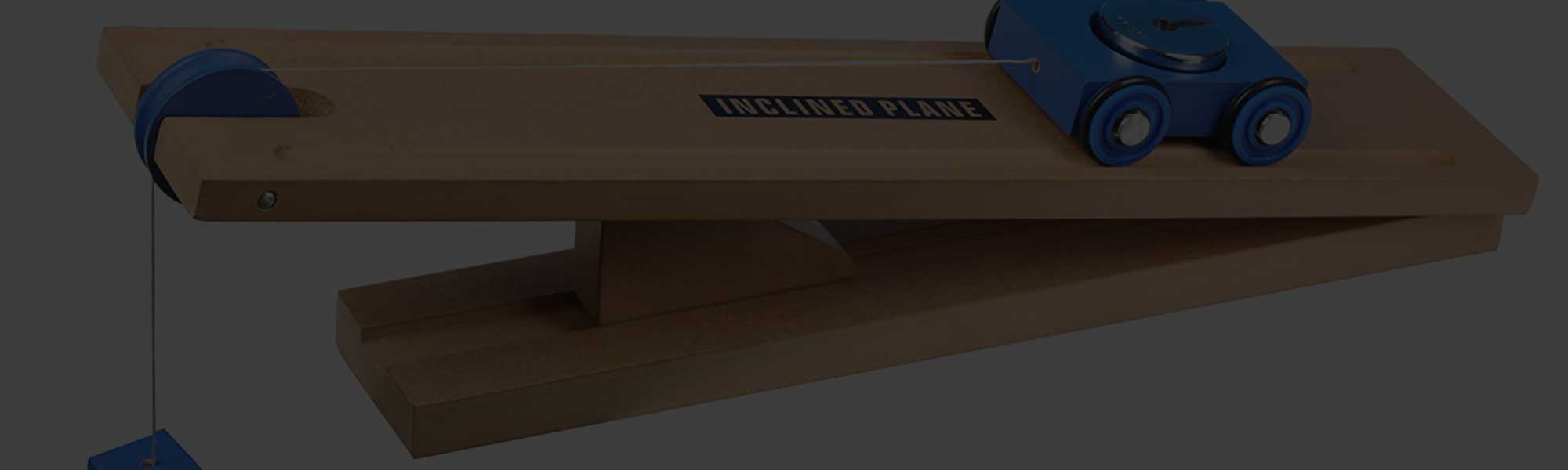
- The six simple machines include the screw, inclined plane, pulley, wheel & axle, lever, and wedge. Learn how each of these work to increase efficiency and reduce work.
- Compound machines are two or more simple machines joined together.
- The effect of lever length and a pivot point (or fulcrum) when lifting a load.
- Work is done when a force moves an object over a distance.
- Forces can be measured in Newtons with special equipment.
- How cogs and gears interact to control speed and change direction. How different pulley combinations can reduce effort to lift or lower a heavy load. The more pulleys the easier the lift, but the lift takes longer.
Victorian Curriculum Links
-
- Scientific knowledge, skills and data can be used by people to explain how they will meet a need or solve a problem VC2S4H02
- Forces, including frictional, gravitational, electrostatic and magnetic, can be exerted by one object on another through direct contact or from a distance and affect the motion (speed and direction) of objects VC2S4U10
- Observations can be used as a basis for posing questions to identify patterns and relationships, and to predict the outcomes of investigations VC2S4I01
- Scientific investigations to answer questions or test predictions can be planned and conducted using provided scaffolds, including identifying the attributes of fair tests, and considering the safe use of materials and equipment VC2S4I02
- Observations, including formal measurements, can be made and recorded by following procedures to use familiar scaled instruments and digital tools as appropriate VC2S4I03
- Scientific knowledge changes over time, often resulting from collaboration or by building on the work of others, and leads to advances in science VC2S6H01
- Scientific knowledge, skills and data can be used by individuals and communities to identify problems, consider responses and make decisions VC2S6H02
- Materials may be electrical insulators or conductors; energy can be transferred and transformed in electrical circuits where the components of a circuit play particular roles in the function of the circuit VC2S6U09
- Investigable questions and reasoned predictions can be used in guiding investigations to identify patterns and test relationships VC2S6I01
- Repeatable scientific investigations to answer questions can be planned and conducted, including, as appropriate, deciding the variables to be changed, measured and controlled in fair tests, considering potential risks, planning for the safe and ethical use of equipment and materials, and obtaining permissions for investigations conducted on Country and Place or in protected areas VC2S6I02
- Equipment can be used to observe, generate, measure and record data with reasonable precision for repeated measurements, using digital tools as appropriate VC2S6I03
Australian Curriculum Links
- Scientific knowledge is used to solve problems and inform personal and community decisions (ACSHE083)
- Forces can be exerted by one object on another through direct contact or from a distance (ACSSU076)
- Consider the elements of fair tests and use formal measurements and digital technologies as appropriate, to make and record observations accurately (ACSIS055)
- Compare data with predictions and use as evidence in developing explanations (ACSIS218)