









The Matter of Matter
- Level: Year 3 to Year 6
- Duration: 90 Minutes
- Numbers: Maximum of 30 students per workshop
- State: VIC & NSW
- Price: $560 per 90 minute workshop
- Surcharge: An additional $80 applies to this topic per day for dry ice
*Travel surcharge also applies based on location.
*Prices exclude GST.
*There is a minimum booking of 2 x 90 minute workshops on the same day – or their cost equivalent.
"*" indicates required fields
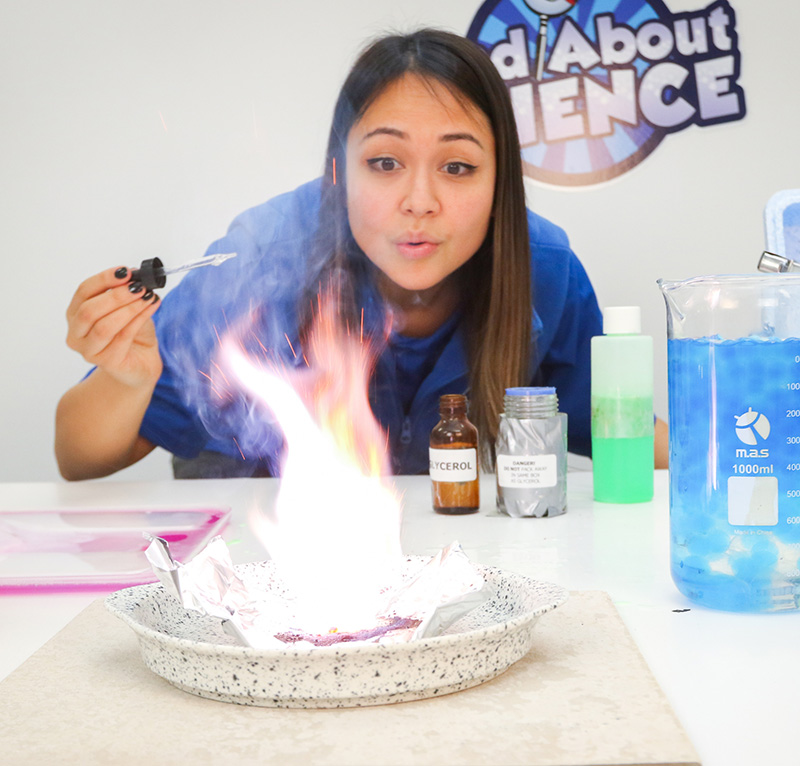
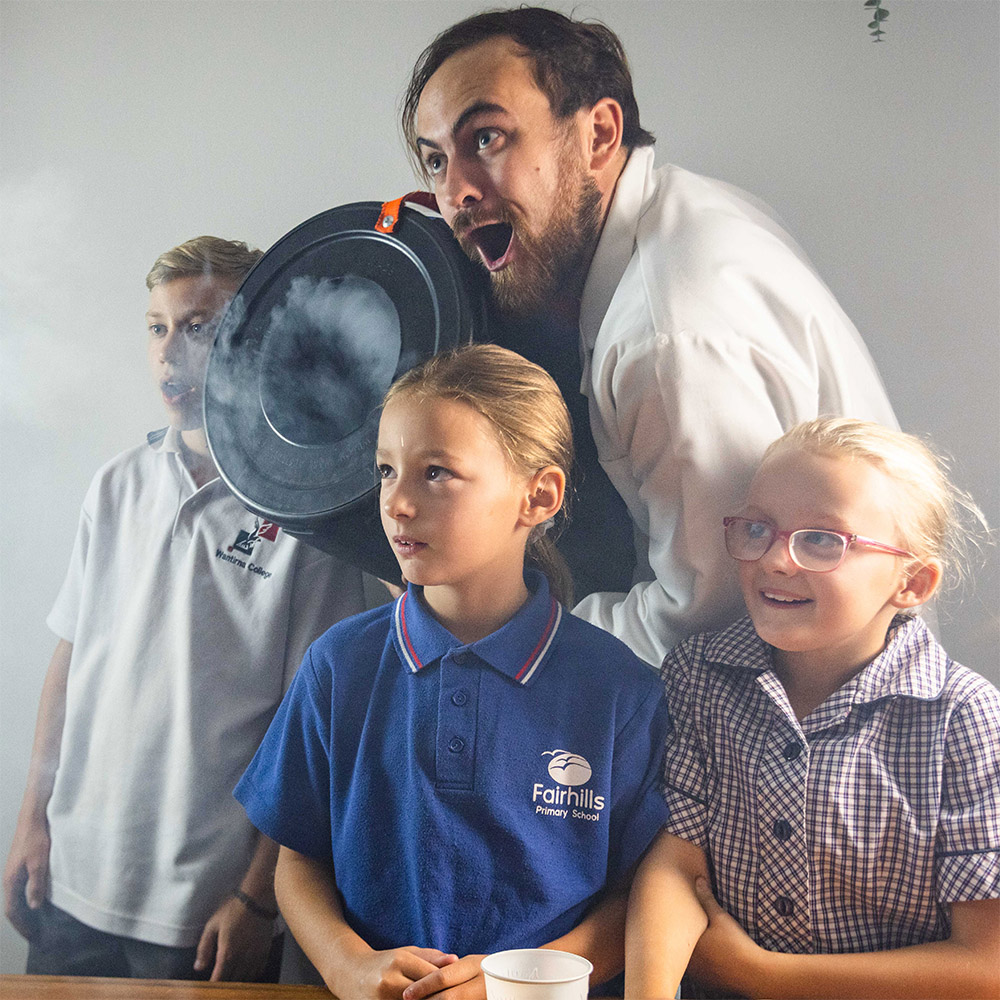
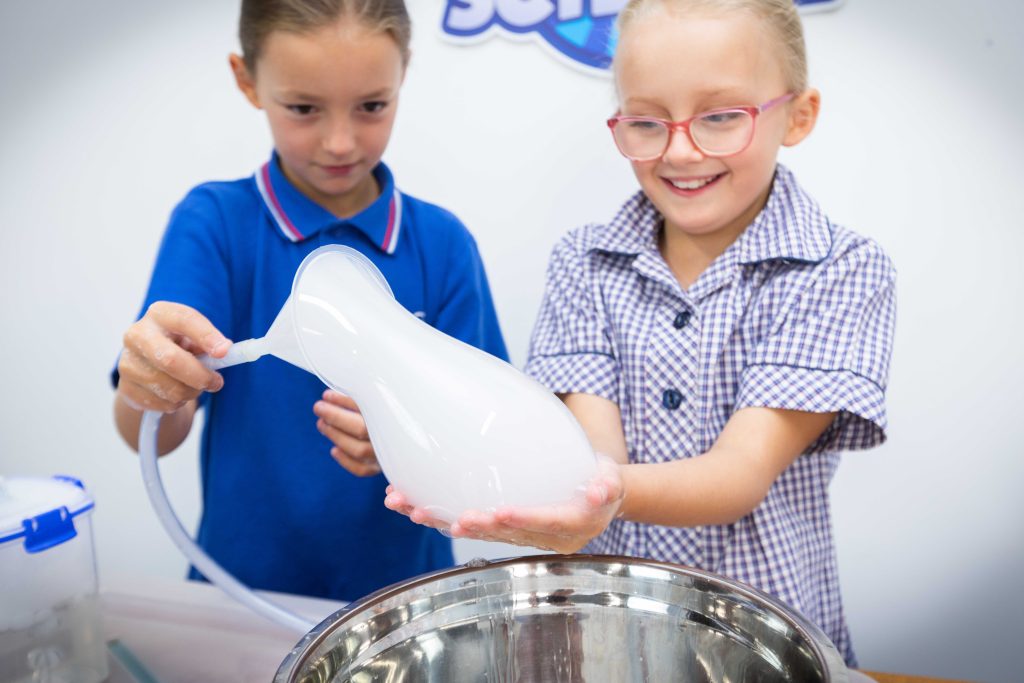
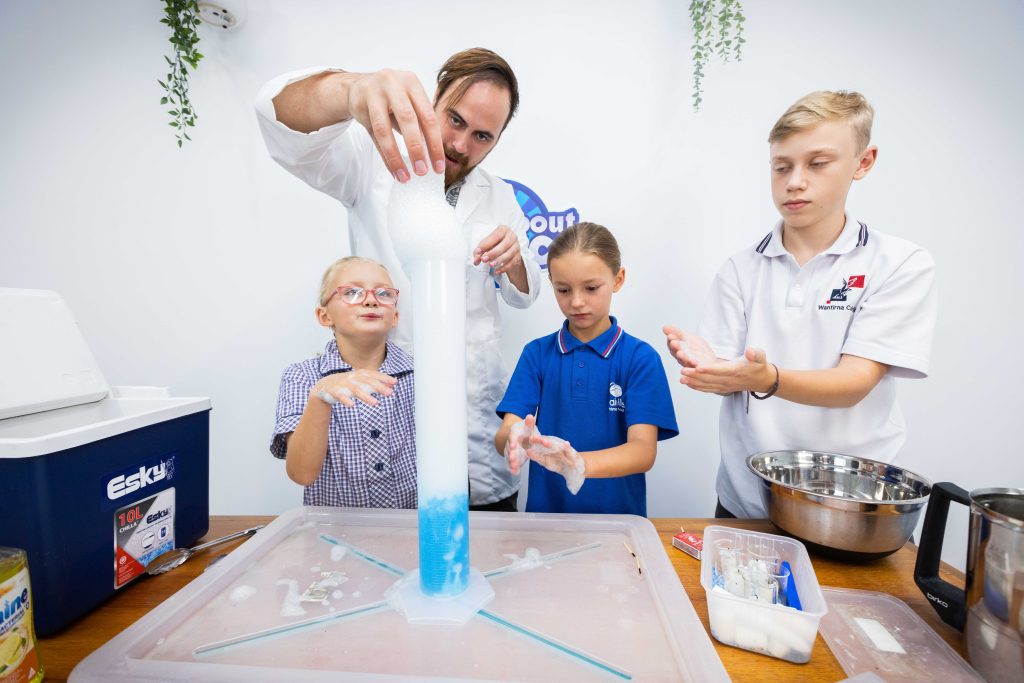
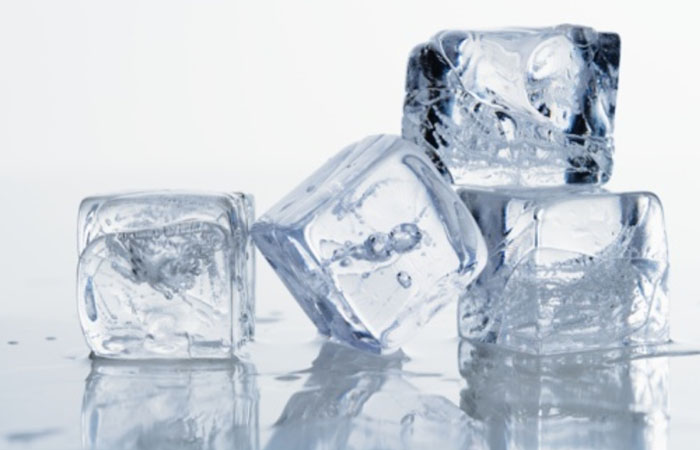
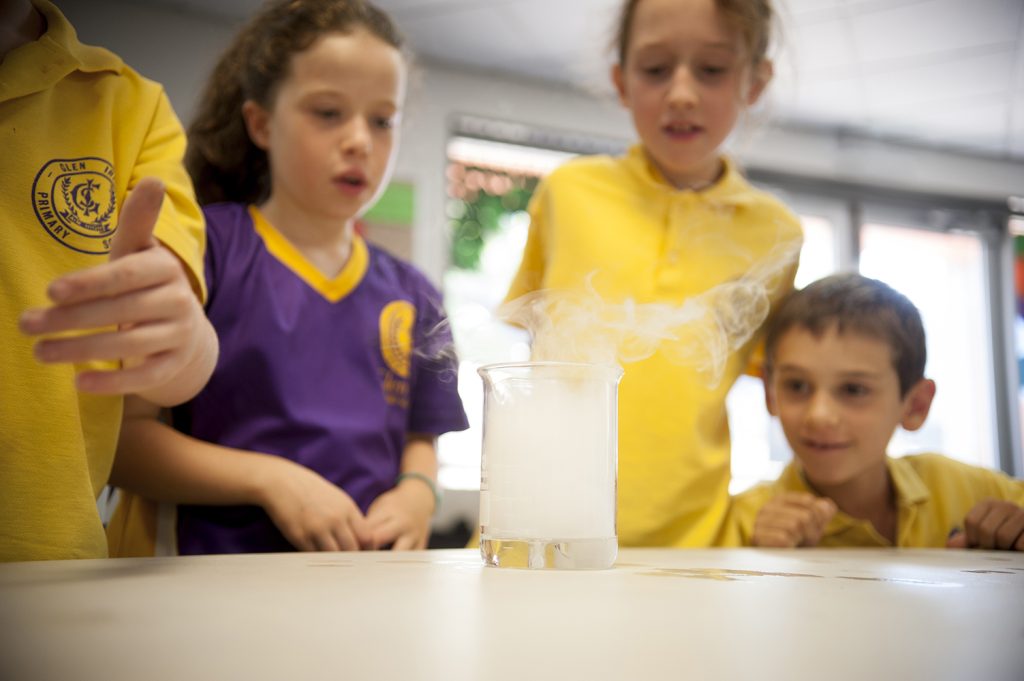
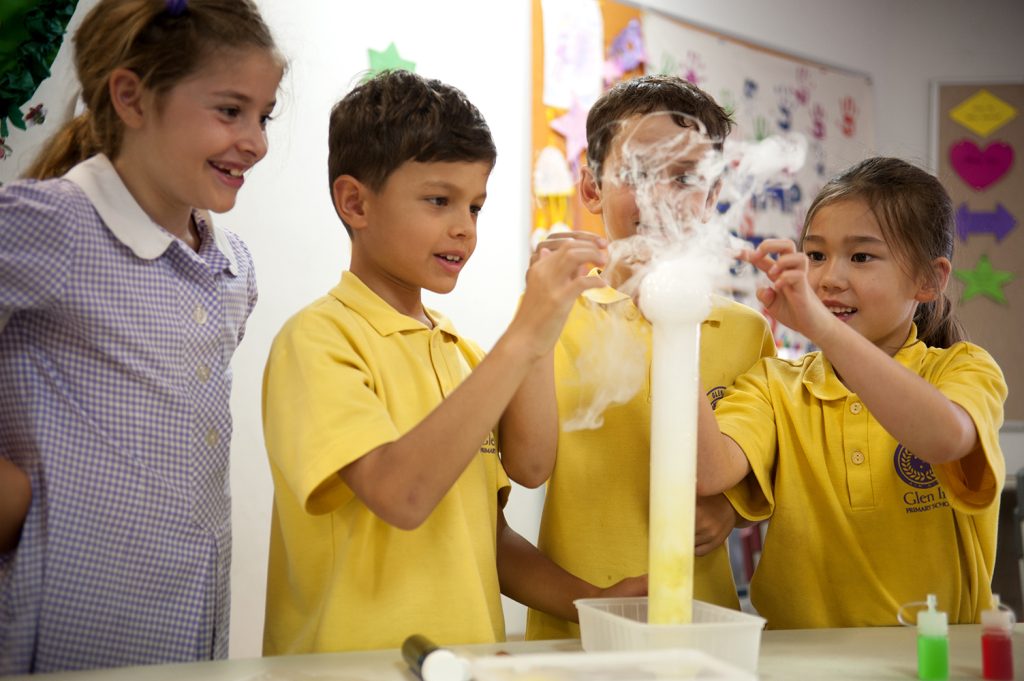
Use the magic of dry ice to explore the three common states of matter – solids, liquids and gases. Touch bubbling fountains, see colour changing reactions, and smell a DIY fire extinguisher- this session matters!
Activities
- Discussion of matter, and demonstration of how gas quickly changes shape and volume.
- Small group classification of matter.
- Demonstration of non-Newtonian matter, and how its properties change with different forces.
- Demonstration of how matter changes state when heat is applied and removed.
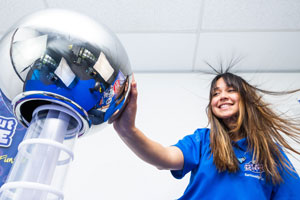
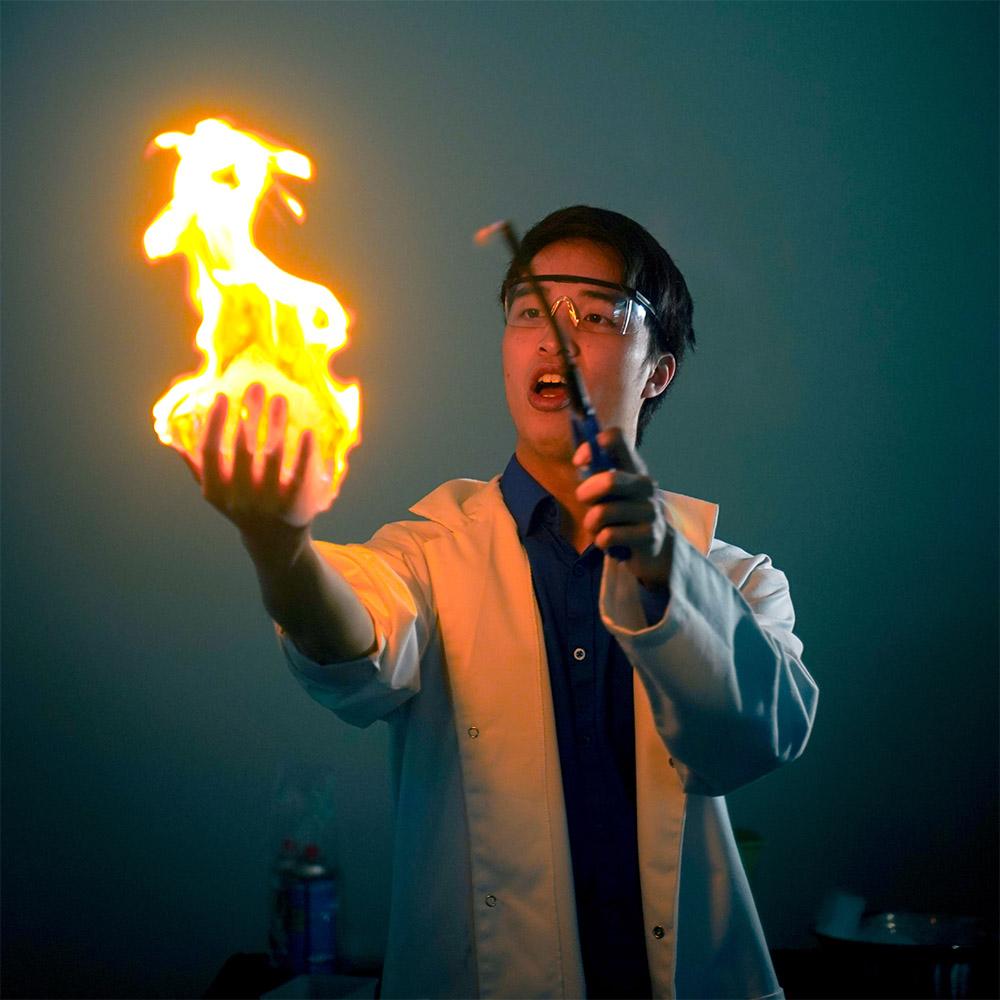
- Demonstration of how plasma is formed.
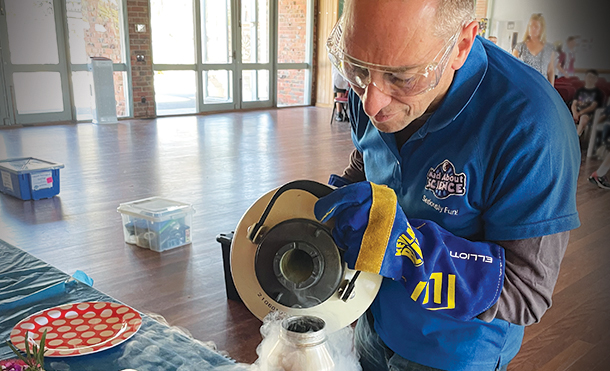
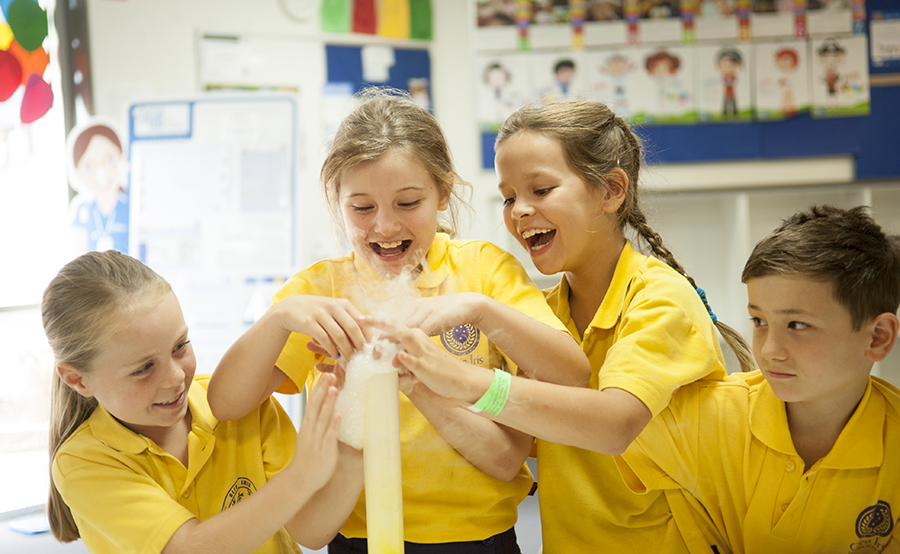
- Impressive dry ice demonstrations.
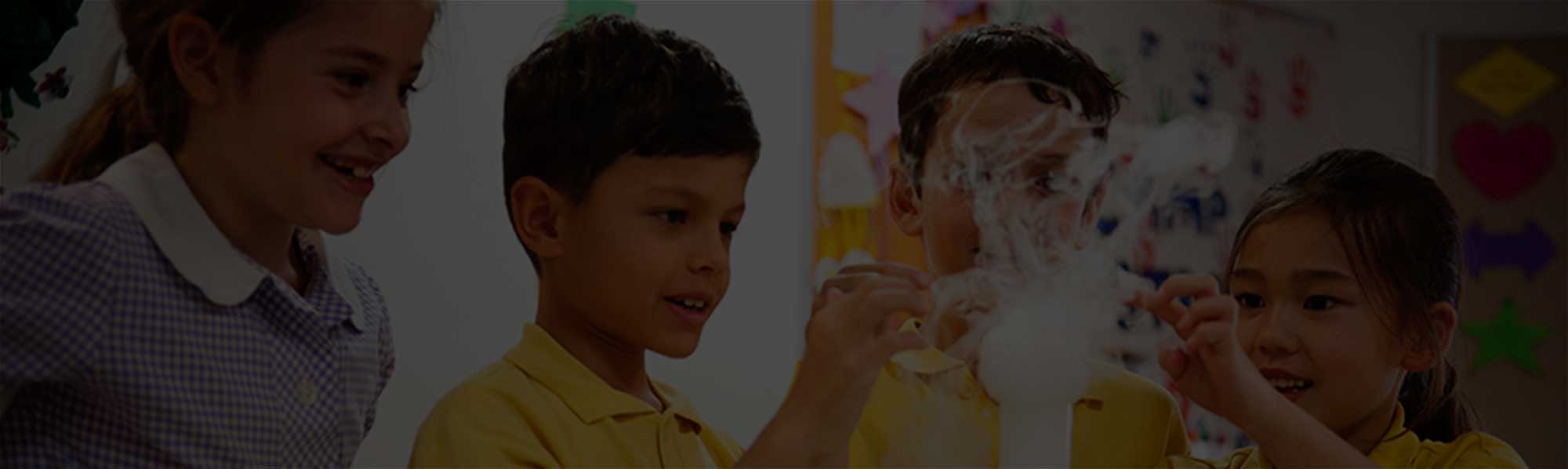
- Students create an everlasting bubbling fountain with dry ice.
- Students identify the gas that dry ice turns into using a flame.
- Students identify the gas that is produced during a chemical reaction between an acid and a base using a flame.
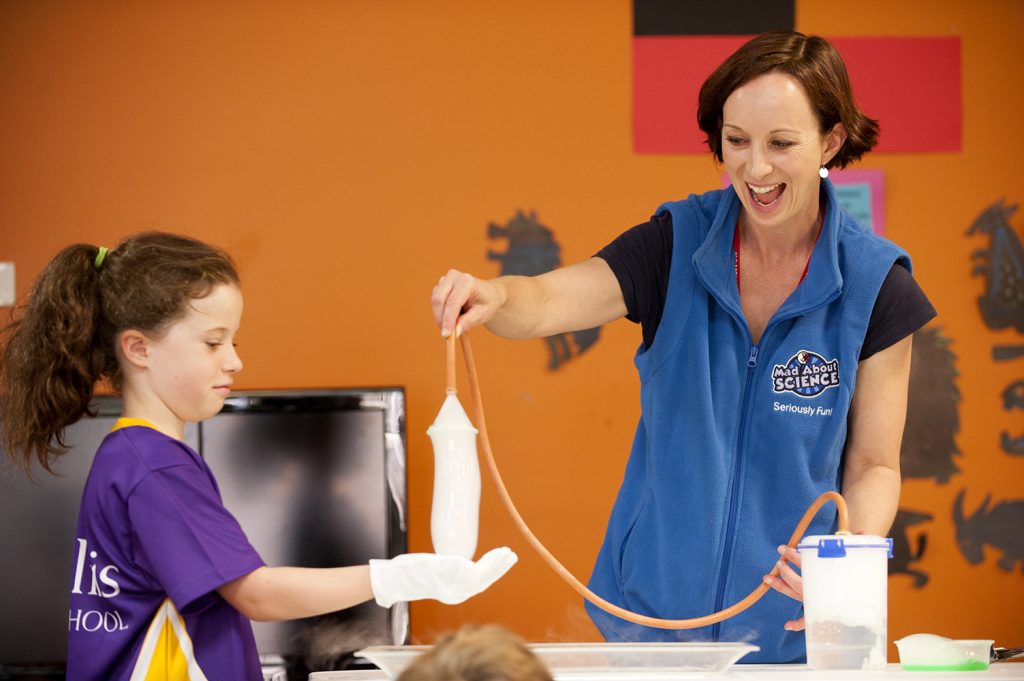
- Memorable cauldron and boo bubble demonstration.
Learning Outcomes
- Matter is anything that takes up space or has a mass.
- Matter can be classified into three main states: solids, liquids, and gasses. Each state has different properties, shape and volume due to different atomic bonds.
- Some matter can not be easily classified into the three main states. One example is non-Newtonian fluids.
- Plasma is a highly energetic state of matter..
- Matter changes between states when it is heated and cooled, and these changes are reversible.
- Scientists identify invisible gasses in a number of ways, including using a flame to see how it will respond in the presence of the gas. Carbon dioxide gas extinguishes fire.
- Dry ice is solid carbon dioxide and responds to heat by sublimating.
- Laboratory techniques, such as organisation, accuracy, measurement, use of equipment, and safety..
- Scientific method and building science vocabulary.
Victorian Curriculum Links
- Solids, liquids and gases have observable properties; adding or removing heat energy leads to a change of state between solids, liquids and gases VC2S4U04
- Heat energy can be generated from different sources; temperature changes may happen when heat is transferred from one object to another VC2S4U09
- The observable properties of matter (solids, liquids and gases) can be explained by modelling the motion and arrangement of their particles; mixtures (including solutions) can be formed by combining 2 or more different substances VC2S6U03
- Changes to substances may be reversible, in which case the substance may be recovered, or irreversible, in which case new substances are formed; for most substances a change of state or dissolving in water is reversible, while irreversible changes include cooking and rusting VC2S6U04
NSW Curriculum Links
- Describes how adding or removing heat causes a change of state (ST2-6MW-S)
- Identifies that objects are made of materials that have observable properties (STe-4MW-ST)
- Identifies that materials can be changed or combined (ST1-6MW-S)
- Plans and uses materials, tools and equipment to develop solutions for a need or opportunity (ST3-2DP-T)
- Questions, plans and conducts scientific investigations, collects and summarises data and communicates using scientific representations (ST2-1WS-S)
Australian Curriculum Links
- A change of state between solid and liquid can be caused by adding or removing heat (ACSSU046)
- Solids, liquids and gases have different observable properties and behave in different ways (ACSSU077)
- Changes to materials can be reversible or irreversible (ACSSU095)
- Compare results with predictions, suggesting possible reasons for findings (ACSIS216)
- Communicate ideas and processes using evidence to develop explanations of events and phenomena and to identify simple cause-and-effect relationships (ACSIS093)
- With guidance, plan and conduct scientific investigations to find answers to questions, considering the safe use of appropriate materials and equipment (ACSIS065)
- Participate in guided investigations, including making observations using the senses, to explore and answer questions (ACSIS025)